Connect with us

Breaking News

How Doctor Oluwafemi Rotifa slumped, died at Rivers State University Teaching Hospital (RSUTH)

Published

on

BREAKING NEWS: Did You Miss The 400 $ex T4pe of Equatorial Guinea senior official Baltasar Ebang Engonga? Quickly W4tch! Before They Are deleted Be The First Person To See The Full Videos. Now!Nigerian doctors are mourning yet another avoidable tragedy. This time, the death of Dr. Oluwafemi Rotifa, a young resident doctor at Rivers State University Teaching Hospital, RSUTH, who reportedly collapsed and died after a gruelling 72-hour call duty

Vanguard gathered that the late doctor, fondly called Femoski by colleagues, was a former President of the Port Harcourt University Medical Students’ Association, PUMSA, and was registered with the United Kingdom’s General Medical Council, awaiting placement abroad.

According to eyewitness accounts, Rotifa had been on continuous call duty for three days in the Emergency Room before retreating to the call room to rest.

It was there that he slumped and later died, despite efforts to resuscitate him in the Intensive Care Unit.

Confirming the development to Vanguard, the President of the Nigerian Association of Resident Doctors, NARD, Dr. Tope Osundara, described the incident as both preventable and a damning reflection of Nigeria’s collapsing health system.

“What happened is that he was on call in the Emergency Room. Afterward, he went to the call room to rest, and it was there that he died. Unfortunately, he was the only one attending to the patients.

“The overuse of manpower strained his health and led to this painful death. It was a death on duty,” Osundara lamented.

He called on government to urgently support the family of the deceased and overhaul the system that continues to push doctors to exhaustion.

“The burnout among medical doctors, especially resident doctors who are manning most of the teaching hospitals, is becoming very worrisome.

“We have cried out repeatedly. The few doctors left in this country are overworked, underpaid and poorly motivated.

BREAKING NEWS: Did You Miss The 400 $ex T4pe of Equatorial Guinea senior official Baltasar Ebang Engonga? Quickly W4tch! Before They Are deleted Be The First Person To See The Full Videos. Now!

“Government must look into remuneration and ensure immediate replacement of doctors who resign or emigrate.

Otherwise, this cycle of needless deaths will continue,” he added.

He said Nigeria’s health sector has in recent years been hit by a massive brain drain, with thousands of doctors leaving for better opportunities abroad, adding that those who remain are stretched thin, often forced to cover double or triple shifts without rest.

Osundara warned that the consequences extend beyond doctors themselves.

“We are not asking for these reforms just for our own welfare, but for the patients. When a doctor is mentally, physically and emotionally broken, he cannot render quality care.

“Patients end up spending unnecessary hours in hospitals, waiting for one doctor to attend to thousands. It is the patients who ultimately suffer the most,” he said.

He stressed the need for government at all levels to urgently address staff shortages, improve welfare packages and enforce humane work schedules for doctors.

He cited that while WHO ration for patient to doctor’s ration is put at 1 doctor to 600, in Nigeria it remains 1 doctor to 10,000 patients.

Meanwhile, since the news of the death of Dr Rotofa, there have been out pouring of tributes across social media, with colleagues and friends describing him as a passionate young doctor whose life was cut short by a system he served with dedication.

Those close to him described him as diligent, selfless and deeply committed to his patients.

Some doctors who spoke to Vanguard described his death as shameful, queried why young doctors should be dying in 2025 from overwork.

They insisted that if this continues, the health system will keep losing both patients and doctors, adding that reform cannot wait any longer.

Death heartbreaking, unacceptable —NMA

Adding its voice, the Nigerian Medical Association, NMA, described the incident as heartbreaking and unacceptable.

Speaking with Vanguard, NMA Vice President, Mr. Benjamin Olowojebutu said: “It is extremely sad to lose our doctors in the prime of their work, dying in the line of duty. It is extremely frustrating that the workload on the few doctors left in this country has now taken a big blow.

“NMA will continue to engage relevant stakeholders on the working hours of doctors. Right now, the working hours and workload are enormous for the few doctors remaining.

“Adequate welfare in terms of salaries, allowances, and especially a comprehensive health insurance scheme for every doctor working and living in this country must be prioritised.

“We commiserate with the family of our colleague and his friends. May his gentle soul rest in peace. This death must count for some massive improvement in the health sector.”BREAKING NEWS: Did You Miss The 400 $ex T4pe of Equatorial Guinea senior official Baltasar Ebang Engonga? Quickly W4tch! Before They Are deleted Be The First Person To See The Full Videos. Now!

Continue Reading

Breaking News

National Pension Commission (PenCom) changes price disclosure rule

Published

on

National Pension Commission (PenCom) has directed Pension Fund Administrators (PFAs) to discontinue the publication of daily unit prices for Retirement Savings Account (RSA) and Retiree Funds on their websites, replacing the requirement with a six-month disclosure of returns based on a three-year rolling average.

The directive was contained in a circular issued by the commission.

Under the new guideline, PFAs must stop implementing Section 2.0 (iv) of the Commission’s March 23, 2013 circular, which required them to display daily unit prices for the last seven days.

Instead, they are to publish on their websites the last six months’ rate of return — calculated as a 36-month compounded rolling average in line with the Circular for the Calculation and Reporting of Rate of Returns by Licensed Pension Fund Operators (LPFOs).

According to the commission, the rate of return must be clearly displayed on the homepage of each PFA’s website.

For instance, the six-month disclosure covering April to September 2025 would reflect the 36-month compounded returns ending in each of those months.

This has however raised transparency concerns in the pension industry.

The 2013 circular on Minimum Information to be displayed on PFA Websites formed part of PenCom’s transparency framework for the Contributory Pension Scheme.

The latest addendum modifies that requirement but does not remove PFAs’ obligation to disclose performance information.

Industry watchers say the development may reignite debate over the balance between long-term investment reporting and real-time transparency in Nigeria’s pension industry.

All enquiries on the addendum, the Commission said, should be directed to its Surveillance Department.

An industry analyst who does not want her name mentioned said the move could reduce contributors’ access to real-time performance data.

She said: “Daily unit prices allowed RSA holders to independently track short-term movements and detect fluctuations in fund valuation.

“With only a three-year rolling average now required, contributors will no longer see recent performance in isolation”, she noted.

The analyst added that while pension funds are long-term vehicles, removing daily disclosure raises concerns about information asymmetry.

“PFAs will still compute daily valuations internally. The issue is whether contributors should be denied access to data that already exists,” the analyst said.

However, another pension expert defended the directive, noting that pensions are structured for long-term accumulation and should be assessed over extended periods.

“A 36-month rolling average smooth’s out short-term volatility and provides a more accurate reflection of sustained performance,” the expert said, warning that excessive focus on daily fluctuations could encourage reactionary fund switching.

Continue Reading

Breaking News

Dollar rises in black market on Monday, traders quote new exchange rate

Published

on

Dollar edges higher against the naira in black market trading Dollar edges higher against the naira in black market trading

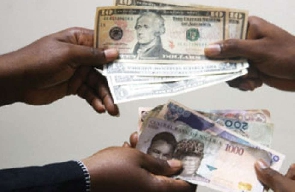
The United States dollar at the parallel market increased in value on Monday, Febuary 23 with traders quote at N1,375/$ as the new selling exchange rate.

The new rate is a slight depreciation for the naira when compared to N1,343 a dollar market closed on Friday, February 20, 2026.

Abdulahhi, a forex dealer, told Legit.ng that the new exchange rate follows renew demand in the market.

“I am currently selling dollars at N1,375/$1 and buying at N1,355/$1. The pound is trading at N1,845 to sell and N1,805 to buy, while the euro is also moving steadily in the market.

“It seems this week the dollar will return to over N1,400. I have been getting a lot of request.”

The fall of the naira comes as BDC operators continue to face difficulties in accessing dollars from commercial banks.

BDCs can get dollar

The apex bank had previously issued a circular allowing licensed BDCs to access foreign exchange through authorised dealers at the prevailing market rate.

Under the directive, each BDC is permitted to purchase up to $150,000 weekly, subject to Know Your Customer (KYC) requirements and due diligence checks, Punch reports.

Leadership reported that despite a policy announcement, some operators disclosed that no transactions have been completed under the new arrangement.

A BDC operator, who requested anonymity, said the directive remains largely unimplemented. According to him, the circular provides that disbursements will be made through settlement accounts, a provision that has raised operational concerns.

He questioned the feasibility of seamless, real-time transfers between domiciliary accounts across different banks, noting that such infrastructure may not yet be fully in place.

The operator added that while commercial banks appear supportive of the policy, many are still developing internal processes to align with the CBN’s directive.

He explained that BDCs are required to submit bid orders through their banks, which would then access the market on their behalf.

Naira in the official market

Meanwhile, in the Nigerian Foreign Exchange Market (NAFEM), the naira closed against the US dollar on Friday, February 20 at N1,346.32/$1 from N1,341.35/$1 a day earlier.

At the GTBank FX desk, the naira weakened by N7 against the dollar to quote N1,356/$1.

Continue Reading

Trending

Copyright © 2026 Naijacoaded | All Right Reserved | Powered by Naijacoaded.com |