Connect with us

Lifestyle

People who keep their homes spotless swear by these 6 weekly routines

Published

on

Despite recent evidence suggesting that a cluttered desk leads to a creative (not cluttered) mind, I’m determined to declutter.

It’s difficult to be creative when you can’t find your ideas buried in piles of articles, legal pads, and journals, or elsewhere on tiny scraps of paper and sticky notes. Not that you could tell by looking, but I prefer the aesthetic of a neat, organized workspace.

Maintaining a clean and organized space doesn’t have to be a multiple-hour ordeal that ends with a sore body. The secret lies in creating a simplified routine that works best for you and avoids overwhelming you.

People who keep their homes spotless swear by these six weekly routines, no deep clean required:

1. Identify the problem area

Name it so you make the change you want clear — having spent a marathon weekend clearing out the detritus of a project I recently completed, my goal is to remain clutter-free.

By pinpointing where clutter accumulates or where cleanliness lapses occur, individuals can develop targeted strategies to address those specific areas. Research has found that this might involve creating a dedicated “home” for items that consistently end up out of place or setting a small, regular routine for a particular problem spot.

2. Problem-solve for that space

Once you’ve identified the change you want, it will not come to you magically, à la the so-called law of attraction. You must consider possible actions you can take to achieve your goal.

There are a number of ways I can stop cluttering up my study. I can resolve to put every paper, article, or idea where it needs to be when it comes across my desk. Whoever said you should only touch each piece of paper once was right, and the same applies to email and internet articles.

A 2013 study explained that keeping a spotless home involves continuously facing and resolving minor issues like unexpected spills, accumulated clutter, or persistent dirt and odor problems. Effectively tackling these problems requires a systematic approach, including identifying the specific issue, brainstorming potential solutions, weighing their pros and cons, and implementing the most effective approach.

3. Choose a solution

It doesn’t matter what you choose, as long as you believe you can get behind it. I’ll try a weekly strategy, taking Saturday afternoon, when I’m usually semi-brain-dead from a long run anyway, to declutter the prior week’s accumulation.

Research suggests that breaking down cleaning into smaller, manageable tasks and establishing a regular routine can help people maintain a spotless home without resorting to frequent deep cleans. This approach leverages the principles of habit formation and positive reinforcement, making cleaning a less daunting and more sustainable practice.

4. Evaluate your progress

You’ll need a way to track what you’re doing. There’s an app for that, but a diary or hash marks on a calendar, noting daily whether you’ve cleaned or organized, will do.

After two weeks, I’ll be able to tell if my weekly strategy is working since the absence of piles will be concrete and measurable, literally. You can consult your daily record to see how often you’ve been talking to people, your kitchen to see if you’ve been keeping the junk out, or your calendar to see how frequently you’ve walked.

Tracking your progress and seeing the tangible results of your cleaning efforts acts as a positive reinforcement, making you more likely to repeat the desired behaviors. Studies suggest that people who are good at self-control tend to structure their lives and monitor their progress, which can help in forming new habits like regular tidying.

5. Revise your plan

If your evaluation tells you you’re not cutting it, or if you are, and you’re ready to bump it up a notch, consider your next move. If my study is without piles, I’ll probably stick to my plan and add to it by working on some other areas of my world that need decluttering. If my plan’s not working, I might go from a weekly to a twice-a-week attack.

A 2016 study explained that by shifting the focus from infrequent, overwhelming deep cleans to consistent, manageable cleaning routines, individuals can leverage the benefits of cleanliness to maintain a spotless home and enhance their overall well-being.

6. Reward progress

Often, progress is its own reward. I expect my clutter-free environment will be both aesthetically and practically gratifying. Sometimes a concrete reward is in order. Small gifts to yourself for a job well done can help keep you motivated.

One of the biggest problems I encounter among my clients is a feeling that they have to make changes that other people think they should make, using strategies that others tell them will work. You must decide on the change you want in a way that feels right for you.

While a small treat can be helpful, excessive reliance on material rewards can shift focus from the intrinsic benefits of a clean home to the reward itself, potentially diminishing long-term motivation. An article by Utah State University suggested that framing cleaning as an investment in your well-being, rather than a burden.

The beauty of these steps is that they provide a structure while still allowing for flexibility. You can experiment until you find a plan that works for you.

Continue Reading

Lifestyle

You’ll Drink Red Wine Regularly, If You Know These 7 Hidden Health Benefits Of It

Published

on

Whether drinking red wine offers any perceptible medical advantages is one that is as yet one that is being discussed today.
Nonetheless, studies have shown that ingesting a moderate measure of red wine consistently, with a liquor fixation going from 12 to 15%, can assist with keeping away from a scope of infirmities, including coronary illness. Remembered for this is the utilization of wine that has a tannic substance of something like 5%.

It is vital to remember that there is an extremely slight line isolating what is suitable based on what is over the top. It is conceivable that over the top utilization of wine can adversely affect one’s wellbeing. Then again, drinking a lacking measure of liquor won’t furnish you with a similar medical advantages that moderate consumers appreciate. Moderate consumers polish off a normal measure of liquor every week.

Squashing and maturing the entire, dull shaded grapes prompts the development of red wines that have a wide assortment of flavors and tints because of the grapes’ complicated synthetic creation. Merlot, Pinot Noir, Cabernet Sauvignon, and Shiraz are only a couple of the red wines that are among the most well known, and red wines by and large, are among the most famous wines.

1. Diminishes how much “terrible” cholesterol in the body

Drinking red wine routinely can assist your body with lessening the dangerous degrees of cholesterol that it conveys, as indicated by various logical examinations. A new report reached the resolution that the strong Tempranillo red grapes that are utilized in the development of Rioja and different kinds of red wines add to a decrease in the gamble factors that are related with elevated cholesterol. These grapes are utilized in the creation of red wines.

2. Wealthy in a large number of various sorts of cell reinforcements

Before you can loosen up with a beautiful glass of red wine in the wake of a difficult day and put your feet up with a few perusing and a glass of wine, you really want to initially turn into a specialist on wine and advance essentially all that there is to be familiar with it. Might you at some point compassionately portray both the useful and the terrible impacts that consuming it can have on your wellbeing, considering the way that it contains a high centralization of strong cell reinforcements? The more obscure the grape, the higher the grouping of the counter oxidants resveratrol, epicatechin, and catechin, as well as proanthocyanidins. Resveratrol and proanthocyanidins, the two of which are classes of cancer prevention agents, are generally responsible for your advantageous condition of wellbeing.

3. Guarantees the proceeded with great soundness of the heart

Besides the fact that it helps lower cholesterol levels, however it likewise adds to the general soundness of the heart and keeps it in great shape. Polyphenols are a sort of cell reinforcement that can be tracked down in red wines. These polyphenols help to keep veins adaptable and decrease the gamble of blood clumps by bringing down the gamble of thickening. Nonetheless, it is totally important to remember that toasting overabundance is terrible for the wellbeing of your heart.

4. Brings down the gamble of creating disease in the course of one’s life

It has been shown that drinking red wine consistently and with some restraint can effectively lessen the possibility obtaining a few types of malignant growth, including basal cell carcinoma, colon disease, prostate carcinoma, and ovarian disease. Scientists tracked down that a portion of resveratrol restrains the essential capability of a protein that attempts to battle malignant growth in human disease cells. Their discoveries were distributed in the diary Disease Exploration.

5. Advantageous in the anticipation and treatment of the normal virus

The counter oxidants remembered for red wines can ease a portion of the distress related with the normal virus by safeguarding cells from the possibly destructive impacts of free extremists. Scientists accept that free revolutionaries contribute fundamentally to the improvement of various sicknesses, including the normal cold, disease, and others.

6. Brings down the gamble of encountering clinical sorrow in the course of one’s life

Standard utilization of liquor in moderate sums was viewed as related with a decreased gamble of clinical wretchedness, as per the discoveries of a review that was led on individuals in their center a very long time through their brilliant years. The review members went in age from individuals in their center a long time to individuals in their brilliant years. The people who drank red wine consistently had a lower chance of clinical misery contrasted with the individuals who didn’t drink red wine consistently.

7. Directs glucose

The grape skin is one of the most outstanding spots to search for the normally happening part known as resveratrol. Diabetics are accounted for to profit from its capacity to assist them with better dealing with their glucose levels. Individuals who took cases containing 250 milligrams of resveratrol once everyday for a considerable length of time had lower levels of glucose in their blood than the people who didn’t take the enhancement. These outcomes were contrasted with those of individuals who didn’t take the enhancement. Notwithstanding these benefits, taking resveratrol can likewise assist patients with bringing down their systolic pulse and their general muscle versus fat ratio.

Continue Reading

Lifestyle

If You Have These Signs, Your Blood Flow May Not Be As Good As It Could Be

Published

on

Blood that you can’t drink. Something stops oxygen, nutrients, and blood from moving easily through the body, which causes this disorder. When something like this takes place, there is movement. This can happen if you eat too many dangerous fats, have diabetes, or have other health problems. When this happens, it can show up as bad signs or symptoms.

The earlier you notice the warning signs and get medical help, the better chance you have of solving the problem.
If you don’t pay attention to these signs, it’s possible that your body’s blood flow isn’t working right. If you read this post, you will learn something new. These things show that there isn’t enough blood flow:

Because there isn’t enough blood flow to that area, this illness could happen anywhere in the body. If the body isn’t getting enough blood, it could also show up on the face. Some parts of the body feel like they are on fire or tingly. “Pins and needles” is the term for this feeling. This is a sign that you need to go to the doctor right away.

2. When you walk, you feel like your legs are weak. This is another sign that your heart isn’t getting enough blood into and out of your body. Blood that you can’t drink. If the normal flow of blood and oxygen is stopped, the situation needs to be looked at as a medical emergency. This is because blood and oxygen are needed by every part of the body for it to work right.

If your fingers or toes get cold, this is a third sign that your blood flow is not as good as it should be. But it shouldn’t be assumed that this is the case if it starts and goes on for a long time. Because the feet and fingers shouldn’t feel cold if the blood is flowing well throughout the body.

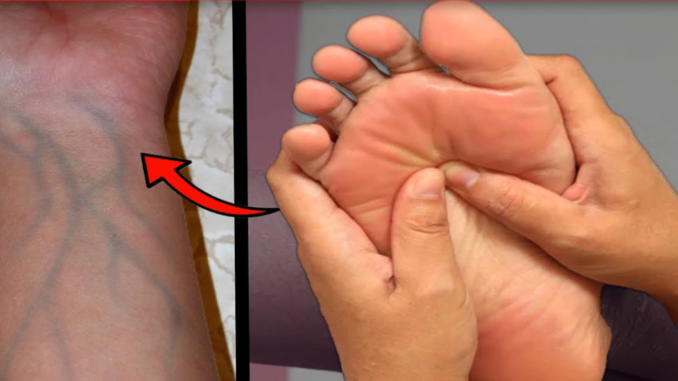
Your veins get bigger when there isn’t enough blood flow, which is a sign that something is wrong. Blood doesn’t move around the body well enough, which leads to the growth of varicose veins. In the medical world, these veins are called varicose veins. Varicose veins can happen anywhere on the body, but they happen most often in the knees. They also have the power to cause a lot of trouble.

Continue Reading

Trending

Copyright © 2026 Naijacoaded | All Right Reserved | Powered by Naijacoaded.com |