Connect with us

Breaking News

He Rides So His Sister Can Learn: The Hidden Heroism of Abuja’s Okada Men

Published

on

Before the first light of dawn brushes Abuja’s skyline, the ‘hum’ of engines already fills the air in Nyanya and Mararaba. Keke and okada riders gather at different junctions, ready to carry office workers, market women and students across the capital.

These men and women are the invisible wheels of the city that keep Abuja in motion long before the day properly begins.

For passengers, the task is simple: simply wave, hop into or on the vehicle, pay your fee and move. But for the riders, each trip is part of a long, grinding day, one that costs a little more than the fuel they burn.

Ibrahim Musa, a 34-year-old keke rider at Kubwa, Abuja, starts his shift before sunrise.

“If I don’t hit the road early, I lose money,” he says, wiping sweat off his face. “Passengers rush in the morning. That’s when you make small change.”

He rents his tricycle from an owner who takes ₦7,000 every week. After paying that and buying fuel, what remains is what feeds his wife and two children. On a good day, Ibrahim makes about ₦8,000. On bad days—when rain falls, roads flood, or fuel prices rise—he goes home with almost nothing.

“People see us and think we are making it,” he sighs. “But sometimes, I ride the whole day just to buy food for the night.”

In Garki, 29-year-old Chukwudi Eze ends most days the same way: counting out a few crumpled notes, separating what must go home to Enugu from what he will keep for himself. “My sister is in polytechnic,” he says with quiet pride, slipping ₦2,000 into an envelope. “My father is late, so it’s me carrying the family now.”

The money is barely enough for his sister’s upkeep, yet Chukwudi insists on sending it, even if it means cutting corners on his own life in Abuja. On lean days, he skips lunch, stretching garri or bread into two meals. His friends tease him for never joining them at beer parlours after work. “If I drink one bottle, that’s my sister’s transport for two days,” he explains.

Musa, another keke rider, dreams beyond the daily grind. He wants to own cars, “two, three small motors, with drivers inside”—but for now, his reality is unrelenting. He wakes at dawn, his eyes still heavy with sleep, and rides until long after most of the city is in bed. By midnight, his shirt is drenched with sweat and dust, his knees ache from hours of cramped sitting, and his palms are sore from gripping the handlebars. Still, he forces himself out again the next day. “If I stop, hunger go catch me,” he says. “Even when body pain, you must ride.”

For both men, sacrifice is measured not only in money but in time. Weddings, naming ceremonies, and even Sunday services are luxuries they cannot always afford. “Sometimes my wife vex,” Musa admits, “because I no dey house. But if I stay, who go pay rent?”

These are not isolated stories. Across Abuja, riders give up pieces of themselves so others can move forward—whether it’s the sister in school, the children at home, or the unseen dream of a better life waiting somewhere down the road. Every keke horn, every hurried trip across town, carries within it the weight of these choices: meals skipped, sleep lost, bones strained and even dreams deferred.

And yet, when asked why they endure, most answer with a shrug and a faint smile. As Chukwudi puts it, “Na my own cross. If I no do am, nobody go do am.”
Riding Through Risk

Abuja’s smooth expressways hide dangerous back routes. Accidents are common for riders who take shortcuts through Nyanya, Karu or Lugbe.

Okada man Yusuf Abubakar shows the scars on his arms from a crash last year. “A car brushed me and I fell. My bike was damaged, and I had to borrow money to fix it,” he recalls.

“If I don’t ride, I don’t eat. So even with pain, I was back on the road the following week.”

The job is risky, not just from accidents, but also from police harassment. Despite partial bans on okada in the city centre, many riders continue to operate in defiance of the restrictions.

They try to evade task force patrols and more often than not, pay daily bribes to keep their vehicle moving. According to a few riders I spoke to [names and images withheld], this act is not a rebellion against the system but one born of necessity, the pressing urge to earn money enough to feed families and thrive in a community that offers few alternatives to their kind.

Abuja’s beauty—the gleaming buildings in Central Area and the clean roads of Maitama—rests on the backs of men like Ibrahim, Yusuf and Chukwudi. They are the ones who ferry cleaners, security guards, market traders and students to their destinations.

Without them, this city comes to a halt.

Yet their stories often go unheard. At sunset, as the day slows, the riders gather again by roadside spots, their faces dusty, their voices hoarse, but their eyes still fixed on tomorrow’s hustle.

Because in Abuja, the city never stops moving, and neither can they.

Continue Reading

Breaking News

National Pension Commission (PenCom) changes price disclosure rule

Published

on

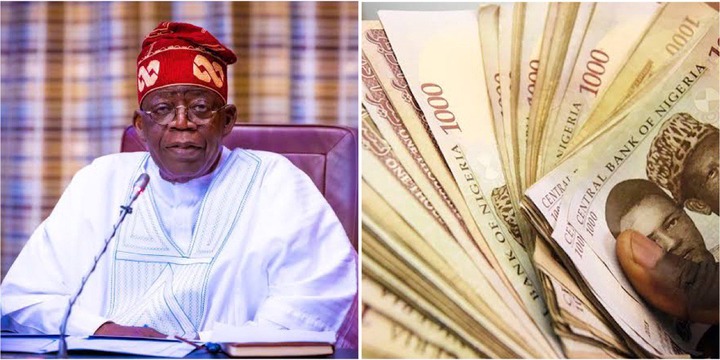
National Pension Commission (PenCom) has directed Pension Fund Administrators (PFAs) to discontinue the publication of daily unit prices for Retirement Savings Account (RSA) and Retiree Funds on their websites, replacing the requirement with a six-month disclosure of returns based on a three-year rolling average.

The directive was contained in a circular issued by the commission.

Under the new guideline, PFAs must stop implementing Section 2.0 (iv) of the Commission’s March 23, 2013 circular, which required them to display daily unit prices for the last seven days.

Instead, they are to publish on their websites the last six months’ rate of return — calculated as a 36-month compounded rolling average in line with the Circular for the Calculation and Reporting of Rate of Returns by Licensed Pension Fund Operators (LPFOs).

According to the commission, the rate of return must be clearly displayed on the homepage of each PFA’s website.

For instance, the six-month disclosure covering April to September 2025 would reflect the 36-month compounded returns ending in each of those months.

This has however raised transparency concerns in the pension industry.

The 2013 circular on Minimum Information to be displayed on PFA Websites formed part of PenCom’s transparency framework for the Contributory Pension Scheme.

The latest addendum modifies that requirement but does not remove PFAs’ obligation to disclose performance information.

Industry watchers say the development may reignite debate over the balance between long-term investment reporting and real-time transparency in Nigeria’s pension industry.

All enquiries on the addendum, the Commission said, should be directed to its Surveillance Department.

An industry analyst who does not want her name mentioned said the move could reduce contributors’ access to real-time performance data.

She said: “Daily unit prices allowed RSA holders to independently track short-term movements and detect fluctuations in fund valuation.

“With only a three-year rolling average now required, contributors will no longer see recent performance in isolation”, she noted.

The analyst added that while pension funds are long-term vehicles, removing daily disclosure raises concerns about information asymmetry.

“PFAs will still compute daily valuations internally. The issue is whether contributors should be denied access to data that already exists,” the analyst said.

However, another pension expert defended the directive, noting that pensions are structured for long-term accumulation and should be assessed over extended periods.

“A 36-month rolling average smooth’s out short-term volatility and provides a more accurate reflection of sustained performance,” the expert said, warning that excessive focus on daily fluctuations could encourage reactionary fund switching.

Continue Reading

Breaking News

Dollar rises in black market on Monday, traders quote new exchange rate

Published

on

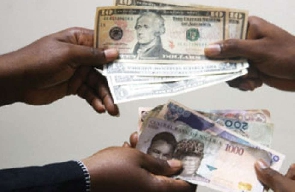
Dollar edges higher against the naira in black market trading Dollar edges higher against the naira in black market trading

The United States dollar at the parallel market increased in value on Monday, Febuary 23 with traders quote at N1,375/$ as the new selling exchange rate.

The new rate is a slight depreciation for the naira when compared to N1,343 a dollar market closed on Friday, February 20, 2026.

Abdulahhi, a forex dealer, told Legit.ng that the new exchange rate follows renew demand in the market.

“I am currently selling dollars at N1,375/$1 and buying at N1,355/$1. The pound is trading at N1,845 to sell and N1,805 to buy, while the euro is also moving steadily in the market.

“It seems this week the dollar will return to over N1,400. I have been getting a lot of request.”

The fall of the naira comes as BDC operators continue to face difficulties in accessing dollars from commercial banks.

BDCs can get dollar

The apex bank had previously issued a circular allowing licensed BDCs to access foreign exchange through authorised dealers at the prevailing market rate.

Under the directive, each BDC is permitted to purchase up to $150,000 weekly, subject to Know Your Customer (KYC) requirements and due diligence checks, Punch reports.

Leadership reported that despite a policy announcement, some operators disclosed that no transactions have been completed under the new arrangement.

A BDC operator, who requested anonymity, said the directive remains largely unimplemented. According to him, the circular provides that disbursements will be made through settlement accounts, a provision that has raised operational concerns.

He questioned the feasibility of seamless, real-time transfers between domiciliary accounts across different banks, noting that such infrastructure may not yet be fully in place.

The operator added that while commercial banks appear supportive of the policy, many are still developing internal processes to align with the CBN’s directive.

He explained that BDCs are required to submit bid orders through their banks, which would then access the market on their behalf.

Naira in the official market

Meanwhile, in the Nigerian Foreign Exchange Market (NAFEM), the naira closed against the US dollar on Friday, February 20 at N1,346.32/$1 from N1,341.35/$1 a day earlier.

At the GTBank FX desk, the naira weakened by N7 against the dollar to quote N1,356/$1.

Continue Reading

Trending

Copyright © 2026 Naijacoaded | All Right Reserved | Powered by Naijacoaded.com |