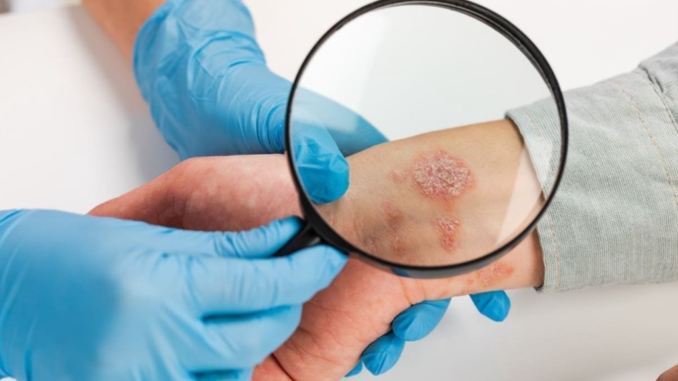
Your bedroom is designed for rest and recovery, yet dermatology researchers are increasingly examining how indoor environments may undermine skin health over time. While sunlight has long been established as a primary cause of skin damage, scientists are now studying artificial indoor light—particularly blue light—as a potential contributor to long-term cellular stress.
According to researchers at Harvard Medical School, modern homes expose people to light wavelengths at levels and durations humans were not biologically adapted to experience, especially at night.
What Blue Light Is and Why Scientists Are Concerned
Blue light, scientifically classified as high-energy visible (HEV) light, occupies a wavelength range of approximately 400–490 nanometers. Dermatology researchers at The University of Manchester explain that this wavelength penetrates deeper into the skin than UVB radiation and reaches the dermis, where collagen, elastin, and DNA-regulating cells are located.
Unlike ultraviolet radiation, blue light does not cause immediate redness or burning. However, laboratory studies published in the Journal of Investigative Dermatology show that HEV light triggers the production of reactive oxygen species (ROS). These unstable molecules damage cellular DNA, impair repair enzymes, and accelerate mutations when exposure occurs repeatedly over long periods.
How Long-Term Blue Light Exposure Can Affect Skin Cells
According to Dr. Thierry Passeron, a professor of dermatology at Université Côte d’Azur, chronic blue light exposure causes oxidative stress that disrupts melanocyte regulation. This explains why prolonged exposure has been linked to uneven pigmentation and accelerated aging.
More importantly, oxidative DNA damage is a known pathway in cancer development. While blue light is not currently classified as a direct carcinogen, researchers cited by the World Health Organization’s International Agency for Research on Cancer (IARC) note that cumulative DNA damage—regardless of source—can increase long-term cancer risk when cellular repair mechanisms are consistently overwhelmed.
Why Nighttime Exposure Is More Harmful Than Daytime Exposure
Skin repair follows a circadian rhythm. According to sleep researchers at Johns Hopkins University, melatonin released at night activates antioxidant defenses and DNA repair pathways in skin cells. Blue light suppresses melatonin production by signaling the brain that it is still daytime.
When melatonin levels drop, research published in Endocrine Reviews shows that skin cells repair damage more slowly and inflammation markers rise. This creates a biological window where DNA errors are more likely to persist, increasing vulnerability to mutation accumulation over time.
Hidden Blue Light Sources in the Bedroom
Many people assume blue light exposure ends when screens are turned off, but lighting engineers at MIT Media Lab point out that modern bedrooms often contain multiple low-intensity light sources operating continuously. Digital clocks, phone notification LEDs, smart TVs in standby mode, and cool-white night bulbs emit HEV light for several hours each night.
Although the intensity is low, dermatologists from the American Academy of Dermatology explain that duration matters. Continuous exposure over years can create cumulative cellular stress, even when no immediate skin reaction is visible.
Why LED Bulb Color Temperature Matters
Lighting researchers at The Lighting Research Center (RPI) explain that color temperature determines blue light output. Daylight and cool-white LEDs emit significantly higher HEV wavelengths than warm or amber lighting.
Because the skin lacks pain receptors that respond to blue light damage, there is no immediate warning signal. According to Dr. Steven Lockley, a circadian neuroscientist at Harvard, this invisibility is why indoor light risks are often underestimated compared to sunlight.
The Role of Skin Barrier Defense and Antioxidants
Research published in Clinical, Cosmetic and Investigational Dermatology shows that blue light weakens the skin’s lipid barrier, increasing water loss and inflammation. Dermatological scientists at L’Oréal Research & Innovation have demonstrated that antioxidants such as niacinamide and vitamin E help neutralize ROS caused by HEV exposure.
However, experts emphasize that biochemical protection alone cannot fully offset continuous environmental stress. The biological mechanism still depends on limiting prolonged exposure.
Why This Matters for Long-Term Skin Health
According to population health researchers at The National Institutes of Health (NIH), cancer risk is rarely caused by a single exposure but by repeated cellular damage combined with impaired repair. While blue light is not equivalent to UV radiation, its ability to penetrate deeply, disrupt circadian repair cycles, and generate oxidative stress places it under increasing scientific scrutiny.
Your bedroom environment plays a direct role in how effectively your skin regenerates each night. When recovery is interrupted consistently, microscopic damage accumulates silently—sometimes for decades—before visible disease appears.
In many cases, health risks are not caused by dramatic dangers, but by everyday exposures that feel harmless. As research continues to evolve, awareness of indoor light environments is becoming an important part of long-term skin health science.