Quickly! Watch Before It’s Deleted! Download Hot 3:00 Minutes $3x V!de0s Here | Watch 2:00 H0t $3x V!d0es Now!
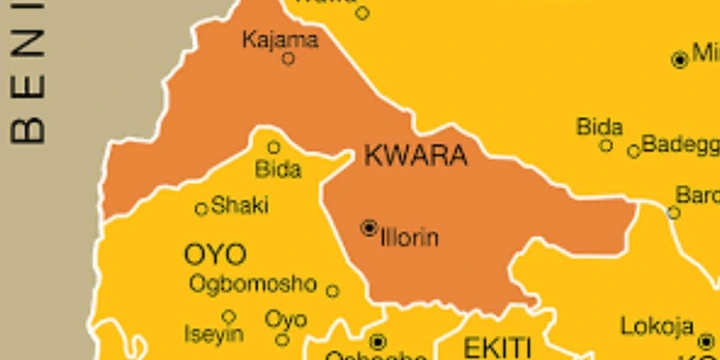
SaharaReporters gathered that the incident occurred around midnight and into Wednesday morning, leaving residents in shock and fear. Terrorists, locally dubbed as bandits, launched a deadly overnight attack on a settlement in Bokungi, Tsaragi community, Edu Local Government Area of Kwara State, killing one person and rustling several cows.
SaharaReporters gathered that the incident occurred around midnight and into Wednesday morning, leaving residents in shock and fear...READ FULL; FROM THE SOURCE.
Sources told SaharaReporters that the assailants stormed the community at about 12 a.m., shooting sporadically to scare residents before carting away dozens of cattle.
One of the sources explained that the attackers targeted the Fulani settlement belonging to Alhaji Garuba and Alhaji Mumini, where Mumini’s first son was reportedly killed during the raid.
The source said Alhaji Mumini’s son, Muhammadu, who had just married a month ago, was killed.
Meanwhile, when the bandits were unable to force open Alhaji Garuba’s door, they went straight to rustle all his cows.
The source told SaharaReporters that the bandits came through Bokungi and moved straight to the settlement.
The source noted that the bandits started firing into the air and everyone began running for safety. They took away many cows and left destruction behind.
According to the source, “They came around 12 a.m. when the kidnappers entered through Bokungi and moved nearly 700 Fulani cows, shooting as they went. They passed through Fengewa before vigilantes and Nigerian soldiers attempted to intercept them, but as of now I don’t know if the soldiers and vigilantes succeeded.
“Alhaji Garuba and Alhaji Mumini were affected, with Alhaji Mumini’s first son killed by them. The stolen cows are estimated to be nearly 1000. People are asking why the Nigerian Army made no real effort.”
Residents further explained that as the attackers advanced through Fengewa, the gunshots alerted local vigilante groups and security operatives, who mobilized quickly to confront them.
A combined team of vigilantes and Nigerian Army troops engaged the bandits in a brief exchange of fire, but it remained unclear by Wednesday morning whether any arrests were made or if the stolen cattle were recovered.
“We got a call this morning from Shegbe that they saw some cows and had stopped them,”another source said.
The killing has heightened fears in Edu Local Government and surrounding areas, with residents lamenting the rising wave of insecurity in parts of Kwara.
Community members also expressed frustration that the attack happened while Governor AbdulRahman AbdulRazaq was reportedly away on vacation abroad, leaving locals to rely heavily on vigilantes for immediate protection.
SaharaReporters reported previously that the staff of the Independent National Electoral Commission (INEC) in Patigi and Edu Local Government Areas of Kwara State have abandoned their duty posts and locked up their offices, citing the escalating wave of kidnappings and bandit attacks.
Top security sources told SaharaReporters that operatives in the intelligence community had advised INEC personnel to stay away from the volatile areas, warning that they could be targeted as “soft victims” by marauding bandits.
One of the sources disclosed that Lade town in Patigi LGA had been largely deserted due to repeated attacks by criminal groups.
“The INEC staff are scared. They don’t want to risk being kidnapped or attacked.”
Another senior source added that the abduction of INEC officials would not only cause a national embarrassment but also pile pressure on the Tinubu administration.
“The fear is that if INEC staff are kidnapped, it would not only be a monumental national embarrassment but would also put the Tinubu administration under intense pressure and scrutiny,” one of the sources said.
“The INEC staff are scared of being kidnapped or attacked. They were told to seek clearance from security agencies before going to their duty posts. Hence, if anything happens to them, they are on their own.”
Residents confirmed that INEC offices in both local government areas remain locked for most days of the week, frustrating the ongoing Continuous Voter Registration (CVR) exercise that commenced in August.
Many locals say the suspension of services has further weakened confidence in government promises of security.
Another staff member revealed that the INEC chairman had bluntly stated there would be no funds to pay ransom in the event of abductions.
“We can’t risk our lives in the name of national service. There is no assurance of our safety. If bandits could attack a community barely two hours after the governor visited the place, then who is safe?” “The INEC chairman has said that he doesn’t have money to pay as ransom to any bandits,” one INEC official told SaharaReporters.
Quickly! Watch Before It’s Deleted! Download Hot 3:00 Minutes $3x V!de0s Here | Watch 2:00 H0t $3x V!d0es Now!
Do you want to easily get our latest news fast? kindly follow our Whats-app Channel via this Link Here Now.
Disclaimer: This content, including any advice provided, is for general informational purposes only and should not be considered a substitute for professional medical advice. Always seek guidance from a qualified healthcare professional or your doctor for proper evaluation and treatment. Naijacoaded.com does not accept any responsibility for the use of this information.