Quickly! Watch The Video Before It’s Deleted! |Save Hot 3:00 Minutes $3x V!de0s To Ur Phone Directly | Watch 2:00 H0t $3x V!d0es Now!
Quickly! Watch Before It’s Deleted! Another Popular Nigeria Pastors Wife $leeps With Male Church Member, Husband Engaged In Physical Compact Him. Watch The Full Video Here Now.
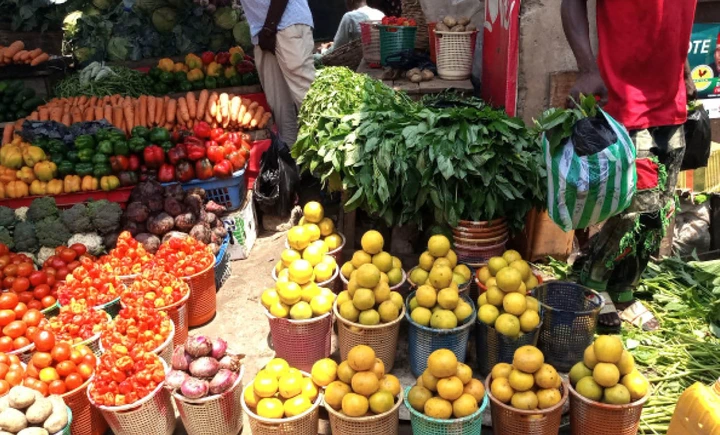
Last week, I attended a seminar-like meeting that passionately debated the issue of recent food import waiver – its meaning, implications and ramifications. Food is everybody’s business, and we must analyse the waiver objectively. For more than a century, Nigeria’s agricultural value chain has been remarkably stable. Farmers in the North planted, harvested, sold part of their produce, and stored the rest. Middlemen bought, hoarded, and resold—sometimes making fortunes. This was narrated in the early 19th century, by Hugh Clapperton, a British naval officer turned explorer, who undertook a journey deep into the heart of what is today Northern Nigeria...READ FULL; FROM THE SOURCE.
He wrote admiringly of the agricultural potential he witnessed. He wrote about fertile lands and an industrious population. In Kano, he observed a bustling economy built on agriculture and processed products such as leatherwork and textiles, and trans-Saharan trade. This was not just trade; it was the lifeblood of Northern Nigeria’s economy. From the days of Alhassan Dantata to modern grain traders in Kano, this system sustained families, built empires, and kept farming profitable. But in one stroke of policy, the Tinubu administration has torn up this balance.
Last year, facing skyrocketing food prices, the government decided not to help farmers by lowering the cost of fertilizer, fuel, or equipment. No. Instead, it opened the borders wide and granted Nw97 billion worth of duty waivers on imported food—rice, maize, wheat, sorghum, according to Nigeria Customs Service. On the surface, it sounded like relief. Prices of rice, pasta, and flour dropped. Billionaire Abdul Samad Rabiu, whose BUA Foods was reportedly among the beneficiaries, triumphantly declared that “food prices are coming down in Nigeria.” He even gloated that hoarders were “crying” with unsold stock. But behind the smiles in Abuja and Lagos, the story in Zaria, Bichi, and Sokoto is one of despair.
Let’s call it what it is: this waiver is less about helping Nigerians and more about political appeasement. The biggest cheerleaders of cheap maize imports are the Southwest’s poultry farmers, who want affordable feed. The biggest losers? Northern maize farmers, who now can’t sell their crops at profitable prices. Tinubu’s government has effectively told northern farmers: “Thank you for feeding the nation for decades, but your sweat and toil mean nothing compared to political expediency.” How do you explain to a farmer in Bichi who spent heavily on fertilizer, pesticide, and irrigation—at prices inflated by subsidy removal and naira devaluation—that his maize will rot in storage because Abuja decided cheap imports matter more than his survival?
This is not new. Nigeria has a long history of short-sighted policies that destroy local capacity. Let me cite three examples: (i) The Structural Adjustment Programme of 1986 was supposed to revive the economy. Instead, it crippled local industries and entrenched import dependency. (ii) The rice imports of the early 2000s nearly wiped-out local rice farmers until tariffs were restored. And (iii) Petrol subsidies were meant to help the poor but only enriched smugglers and oil cabals. Today’s food waiver is walking down the same path: a quick fix for urban applause, a long-term disaster for the nation’s food security.
Agricultural economics is not rocket science: if farmers can’t make profit, they will stop planting. When they stop planting, supply collapses. By not supporting poor farmers, the federal government is simply “killing the only goose that lays the golden eggs”. And when supply collapses, Nigeria becomes permanently dependent on imports. It is happening already. Middlemen, who once kept the market alive by buying and storing produce, are ruined by imports and unwilling to take the risk again. Farmers, seeing no reward for their effort, will scale back. The so-called “cheap rice” of today is nothing but the seed of tomorrow’s famine. And let’s not forget: food insecurity fuels poverty, and poverty fuels insecurity. Northern Nigeria is already battling banditry and unemployment. Add the collapse of farming livelihoods, and you are lighting a match over dry grass.
The federal government is celebrating lower prices in Lagos supermarkets while ignoring the misery in Kano’s grain markets. It is easy politics: urban consumers cheer, businessmen like BUA smile, and the government claims credit. But this is false relief. Nigeria cannot import its way out of hunger. Every imported bag of rice is a nail in the coffin of a northern farmer. Every duty waiver granted is a transfer of wealth from peasant producers in Katsina to billionaires in Lagos and Abuja. As Mike Smart, an award-winning author and founder of Smart Farms LLC beautifully argued, “the future of food isn’t in distant fields or corporate warehouses—it’s in every home, every garden, and every community that takes control of its own food security.” By the current food waiver, the federal government is handing over our national food security to some distant land and corporate dealmakers. A poor farmer is just a “cog in a machine” that is run based on a short-term political calculus rather than long-term stability and security of our nation.
If the government truly wanted to help, it should have: (i) Reduced input costs by subsidizing fertilizer and easing fuel costs for irrigation. (ii) Invested in rural roads, storage, and credit to cut post-harvest losses. And (iii) Protected local farmers with smart tariffs while boosting productivity. Instead, it chose the lazy, politically expedient route—waivers that enrich a few and destroy millions of livelihoods.
Food waivers may win applause in Abuja, but they spell slow death for northern farmers. We are witnessing a repeat of Nigeria’s worst policy mistakes—short-term fixes with devastating long-term consequences. The Tinubu administration must answer a hard question: Whose side is it on—the billionaires who import or the farmers who feed us? Because if northern farmers abandon their fields, Nigeria will one day discover that cheap imports are the most expensive mistake it ever made.
Quickly! Watch The Video Before It’s Deleted! |Save Hot 3:00 Minutes $3x V!de0s To Ur Phone Directly | Watch 2:00 H0t $3x V!d0es Now!
Quickly! Watch Before It’s Deleted! Another Popular Nigeria Pastors Wife $leeps With Male Church Member, Husband Engaged In Physical Compact Him. Watch The Full Video Here Now.
FOR MORE INFO, FINALIZE & FINISH YOUR READING HERE
Do you want to easily get our latest news fast? kindly follow our Whats-app Channel via this Link Here Now.
Disclaimer: This content, including any advice provided, is for general informational purposes only and should not be considered a substitute for professional medical advice. Always seek guidance from a qualified healthcare professional or your doctor for proper evaluation and treatment. Naijacoaded.com does not accept any responsibility for the use of this information.