
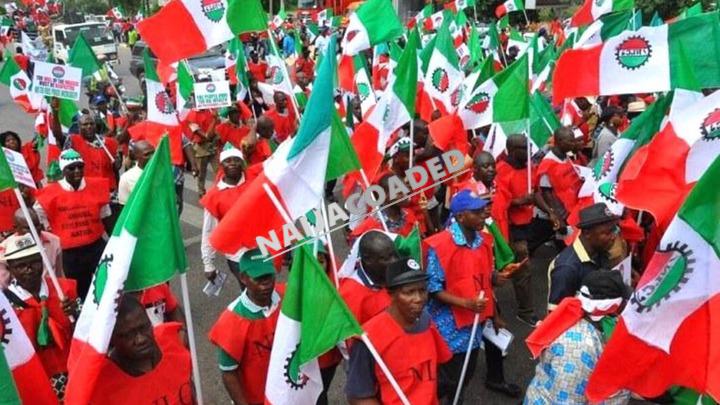
Lagos: Some labour leaders and other stakeholders on Sunday renewed calls for a comprehensive review of Nigeria’s retirement age policy...READ FULL; FROM THE SOURCE.
In interviews with the News Agency of Nigeria (NAN) on Sunday in Lagos, they said that extending workers’ retirement age was necessary due to economic realities, workforce dynamics and the need to retain experienced personnel in critical sectors.
Some of them, however, advised against blanket extension saying that one-size-fits-all approach would not serve national interest.
Comrade Funmi Sesi, the Chairperson, Nigeria Labour Congress (NLC), Lagos State Council, said that the current retirement age of 60 years for civil servants was outdated and no longer reflective of present-day realities.
Sesi said that many workers remained physically active and intellectually capable beyond the age of 60.
She said that increasing the retirement age to, at least, 65 years would enable such workers to continue contributing meaningfully to national development.
“It is long overdue for the government to review the retirement age. Many workers at 60 are still agile, experienced and willing to serve.
“Forcing them into retirement at that stage, especially when pension challenges persist, is not in their best interest,” she said.
According to her, some sectors such as the academia are already enjoying extended retirement ages, with professors retiring at 70 and other academic staff at 65.
Sesi urhed that similar considerations should be extended to other categories of workers.
“At the point many workers are retiring, they have acquired enormous experience, skills and training, both locally and internationally.
“It is only fair that the country benefits from this wealth of knowledge instead of sending them home prematurely,” she said.
Sesi also linked the issue to brain drain, noting that many skilled professionals had left Nigeria in search of better opportunities abroad, where retirement policies had been more flexible.
“Nigeria should not be left behind in aligning with global best practices,” the NLC chairperson said.
Mr Jide Afolabi, the Executive Secretary, Employers Association for Private Employment Agencies of Nigeria, described retirement as a critical phase that should guarantee dignity and financial security.
Afolabi said that retirement was not just an end, but a transition that should be marked by dignity, security, and fulfilment.
“Unfortunately, in Nigeria today, many retirees face uncertainty, hardship, and delayed entitlements.
“Fixing the pension system is key. Workers should not wait for years to access their entitlements after retirement,” he said.
The executive secretary said that extending the retirement age could help to retain knowledge and provide workers with more time to prepare for life after service.
“Experience remains invaluable. Many senior workers possess institutional memory that cannot easily be replaced. Retaining such expertise, especially in critical sectors, could support stability and continuity,” he said.
Afolabi, however, cautioned against a blanket extension.
“Extending retirement age across board could reduce opportunities for younger Nigerians and slow down career progression within the system,” he said.
According to him, a sector-specific approach will be more effective, as critical sectors such as healthcare, education and technical fields, may require extended service years, due to scarcity of skilled professionals.
He said that such extensions should be based on competence, performance, and health status.
Also, Mr Jamiu Akolade, Trustee of the Employment and Labour Lawyers Association of Nigeria, emphasised the need for balance.
Akolade said that extending the retirement age could help to retain critical skills and create opportunities for mentorship.
“However, government must be deliberate in ensuring that younger workers are not shut out of opportunities,” he said.
Similarly, a civil servant, Mr Tunde Olanipekun, described the proposal as beneficial, but warned of possible unintended consequences.
“In principle, extending retirement age is a good idea, but it must be carefully managed.
“If not properly implemented, it could worsen unemployment and frustration among young people,” Olanipekun said.
He advocated flexibility in implementation, urging prioritising critical sectors and allowing workers to retire earlier or later, depending on their needs and performances.
Another civil servant, Mr Fidelis Ekejuru, supported the extension of civil servants’ retirement age, saying that it would have positive impact on workers’ wellbeing.
Ekejuru said that many workers became redundant after retirement and some developed health challenges due to sudden inactivity.
“Allowing them to remain in service longer could help them to stay productive and healthier,” he said.
He also called for improved welfare for retirees, urging governments to complement any retirement policy reform with support systems such as healthcare and social benefits.
“This will help them to live longer and be more fulfilled,” Ekejuru said.
The labour leaders said that beyond any adjustment in the retirement age, urgent reforms in pension administration remained critical.
They said that any retirement policy must strike a balance between retaining experienced workers and creating opportunities for the country’s growing youth population.
Do you want to easily get our latest news fast? kindly follow our Whats-app Channel via this Link Here Now.
Copyright 2026 Naijacoaded. All rights reserved. This material, and other digital content on this website, may not be reproduced, published, broadcast, rewritten or redistributed in whole or in part without prior express written permission from Naijacoaded.