
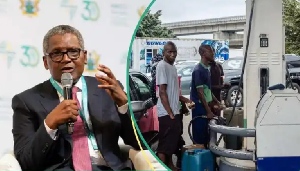
Marketers expressed concerns about Dangote Petroleum Refinery’s direct fuel distribution plan Marketers expressed concerns about Dangote Petroleum Refinery’s direct fuel distribution plan
A day before the start of Dangote Petroleum Refinery’s direct fuel distribution plan, tanker drivers and marketers reported meeting with the corporation out of concern that they might be forced out of business.
According to The PUNCH, the refinery will begin distributing fuel directly on Friday, August 15, after receiving part of the 4,000 compressed natural gas (CNG)-powered vehicles required for the plan...READ FULL; FROM THE SOURCE.
In response, the Natural Oil and Gas Suppliers Association of Nigeria (NOGASA) warned that the refinery’s plan to bypass current distribution channels and supply refined petroleum products directly to end-users would cause a nationwide disruption, long-term product scarcity, and the collapse of existing supply networks.
Dangote’s announcement of the direct fuel distribution program sent shivers down the spines of tanker drivers and association members, who feared they might lose their jobs.
During the recent Annual General Meeting in Abuja, NOGASA National President Bennett Korie urged the refinery to halt its plan and seek further dialogue before beginning the distribution of products to end users.
He added that Dangote alone cannot handle the nationwide distribution of products sustainably and urged President Bola Tinubu to intervene and learn from the experiences of non-functional refineries under the management of the Nigerian National Petroleum Company Limited.
In an interview with The Punch, Yusuf Othman, the National President of the National Association of Road Transport Owners (NARTO), and Chinedu Ukadike, the National Publicity Secretary of NOGASA, confirmed that tanker drivers and petroleum suppliers recently met with the Dangote Group in an attempt to work together.
What marketers say
Dangote and the association have agreed to cooperate through the current distribution channels, according to the NOGASA spokesman. He stated that the refinery had reassured them that fuel would be sold to bulk buyers for subsequent distribution to end users, easing their concerns about job losses.
Ukadike clarified that Dangote would not sell petroleum products directly to end users, but rather to NOGASA members as bulk buyers.
“I want to say that Dangote heeded our plea by agreeing that they will be sending these products to bulk buyers, who are the suppliers. Based on that, we don’t have issues anymore.
“What we were initially concerned about was the supply chain in which we have invested so much. We requested that the supply chain be handled by us in distribution, which I believe Dangote has also complied with, since he is not going to supply directly to end users. We want to appreciate him for that,” he said.
According to Ukadike, NOGASA members were alarmed because they initially believed Dangote would sell directly to consumers.
“We are the bulk buyers; we buy in bulk, and we supply. Before, we thought he was going to sell directly to end users, like telecom masts, hotels, and others. But now, he said no, he will supply to the bulk buyers.
“This gives us the power as suppliers to continue our jobs. We were afraid that if he sold fuel directly to end users, our labor capacity would be lost, and our return on investment would be in jeopardy,” he said.
He also mentioned that NOGASA members have started signing up on the Dangote portal to purchase the refinery’s products in bulk. The trucks would deliver fuel to bulk purchasers, he added.
“Some of our members who are buying in bulk have now registered with their companies, in line with the guidelines provided to us, so they can take these products and sell to end users. We were told that the 4,000 CNG-powered trucks will deliver to bulk buyers. Once payment is made, they will deliver to you, not to end users,” he explained.
In his words, NARTO President Othman said consultations are still ongoing with stakeholders regarding the potential impact of Dangote’s fuel distribution scheme on tanker drivers.
FOR MORE INFO, FINALIZE & FINISH YOUR READING HERE
Do you want to easily get our latest news fast? kindly follow our Whats-app Channel via this Link Here Now.
Disclaimer: This content, including any advice provided, is for general informational purposes only and should not be considered a substitute for professional medical advice. Always seek guidance from a qualified healthcare professional or your doctor for proper evaluation and treatment. Naijacoaded.com does not accept any responsibility for the use of this information.