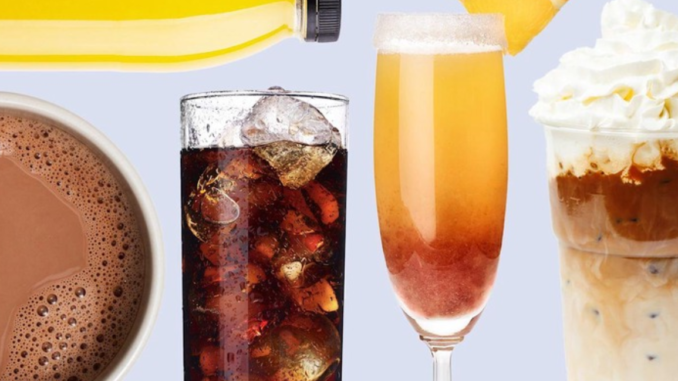
When it comes to cholesterol, we generally know which foods to avoid: the high-fat processed meats, cakes, fried foods, and pastries. But rarely do we think about what we drink. “Drinks work in exactly the same way as food,” confirms Dr Mohssen Chabok, a consultant cardiologist at HCA Healthcare UK’s Harley Street Clinic. “If you drink a large full-fat latte, which is high in saturated fat, it will have a similar effect on your cholesterol levels as eating greasy foods.”..READ FULL; FROM THE SOURCE.
High-fat coffee drinksSwap for: coffee with a splash of milkSugary fizzy drinksSwap for: kombuchaFruit juiceSwap for: a high-fibre smoothieHot chocolateSwap for: teaCocktails and creamy alcoholic drinksSwap for: red wineWhat about plant sterol drinks?
“The cornerstone of cholesterol-lowering advice remains to reduce your saturated fat intake,” says Dell Stanford, a senior dietitian at the British Heart Foundation, “and I think we’re all on the same page with that, given that about half of UK adults have cholesterol levels above the recommended amount, and the majority of UK adults exceed recommended intakes of saturated fat.”
This is because high intakes of saturated fat increase our artery-clogging LDL (low-density lipoprotein), also known as “bad” cholesterol, which can lead to heart attacks and strokes. However, our HDL (high-density lipoprotein), or “good” cholesterol, protects our hearts by reducing the activity of the bad cholesterol.
But it’s not just saturated fat that’s the issue: sugar in fizzy drinks and juices can also raise your cholesterol. This is because excess sugar can overwhelm the liver, causing it to convert sugar into bad cholesterol, while lowering good cholesterol.
Alcohol, meanwhile, can raise the amount of triglycerides, a type of fat in the blood that behaves almost like LDL. “It’s very common to find high levels of triglycerides in those who regularly drink more than the recommended levels of alcohol,” says Dr Chabok. “Triglycerides are a significant cardiovascular risk factor, independent of LDL levels.”
Here, Stanford and Dr Chabok reveal the drinks that will raise your cholesterol – and the healthy swaps to have instead.
High-fat coffee drinks
High-fat coffee drink
Most of us realise that regularly drinking milkshakes may contribute to raised LDL levels, but we may not be aware that ready-to-drink coffee products – such as a bottled frappuccino – are not dissimilar. Many bottled, ready-to-drink coffee products are very high in sugar and fat.
Frappés and mochas often combine large helpings of cream or whole milk with up to 10 or 12 teaspoons of added sugar. In fact, some contain more sugar than a 330ml can of Coca-Cola.
“Top of the list of drinks to avoid are sugary, creamy drinks that give you extra calories, saturated fat and added sugar with no fibre,” says Stanford. “These aren’t really drinks; they’re more like desserts. And over time, there’s a danger they will raise your bad cholesterol.”
Swap for: coffee with a splash of milk
“The healthiest way to drink coffee is a normal filtered coffee with a splash of milk in it – ideally semi-skimmed or skimmed if you’re looking to lower your cholesterol,” Stanford notes.
With some studies suggesting that French press coffee can raise cholesterol, should we throw away our cafetières in favour of filter or instant? “There is some evidence that unfiltered coffee contains a compound called cafestol, which may increase cholesterol levels more than filtered coffee,” Stanford says, “but if you’re drinking no more than three to five cups a day, as part of a balanced diet, it’s unlikely that it will have a detrimental effect on your cholesterol level.”
Sugary fizzy drinks
Sugary fizzy drink
Given that one can of cola could contain up to 10 teaspoons of sugar, regular consumption can lead to weight gain, obesity, type 2 diabetes and fatty liver disease. “Drinks like this are relevant to cholesterol,” says Dr Chabok, “but more so to blood sugar. They can contribute to the development of diabetes.”
While sugar-free drinks (containing artificial sweeteners) might be a better option, especially for people who are overweight or have diabetes, research suggests that artificial sweeteners in drinks can negatively affect cholesterol levels and cardiovascular health. A 2022 study published in The BMJ discovered that regularly eating or drinking foods and drinks with artificial sweeteners is linked to greater risk of heart and circulatory disease. The study didn’t find why there’s a greater risk, but other studies suggest artificial sweeteners affect the ways our bodies control blood sugar levels, which could, in turn, lead to heart disease.
Swap for: kombucha
“Kombucha is basically fermented tea,” Stanford explains, “so it contains probiotics and polyphenols.” Both compounds have been linked to decreased LDL levels. “It does contain some sugar, but usually much less than regular soft drinks,” she adds.
Fruit juice
Fruit juice
While fruit juice itself doesn’t significantly raise cholesterol, it’s high in what’s known as “free sugars”. These cause blood-sugar spikes, which trigger the liver to increase the production of LDL, while lowering HDL and raising triglycerides.
“If you eat an orange, there are no free sugars – the sugars are contained within the cell of the fruit,” Stanford explains. “But if you squeeze an orange to make juice, the sugar comes out of the cells, and you’re basically drinking sugary water that’s got some vitamin C and some orangey flavours in it.”
Swap for: a high-fibre smoothie
“If you regularly drink fruit juice,” says Stanford, “a smoothie could be a better option, especially if it’s made with whole fruits or vegetables and you add things like oats, nuts and seeds that will provide you with soluble fibre. We know that soluble fibre can help lower bad cholesterol levels: it binds to cholesterol in the gut and helps to remove it from the body.” Adding nuts or nut butters can also slow down the rate at which your body absorbs sugar, preventing sugar spikes.
“But there is a downside: like fruit juice, smoothies contain free sugars. The guidelines recommend limiting smoothie consumption to a maximum of 150ml per day. The biggest cholesterol-lowering benefits still come from eating whole fruits rather than consuming them in the form of fruit juices or smoothies. And it’s worth remembering that vegetables, oats, nuts and seeds will all deliver far more fibre.”
Hot chocolate
Hot chocolate
As with bottled ready-to-drink coffee products, it’s the sugar, full-fat-dairy and ultra-processed-foods ingredients in commercial hot chocolate that can damage your health and raise your levels of bad cholesterol, especially cheaper varieties, as they often add milk fat or other oils, increasing the amount of saturated fat and sugar. “Cocoa – and in particular cocoa butter – is high in saturated fat,” Stanford confirms. “Therefore, regularly drinking hot chocolate may contribute to raised cholesterol levels, especially if made with full-fat milk.”
She adds that there are certain ways to mitigate the ill effects: “If you make it with skimmed milk, you’ll reduce the amount of saturated fat. If you make it without sugar, then you’re going to be saving yourself some sugar and calories.”
Swap for: tea
Admittedly, on a cold winter’s day, a herbal tea is never going to provide the same bang for your buck as a steaming mug of Charbonnel et Walker, but when it comes to hot beverages, from a health perspective, tea is hard to beat. “Whether it’s black, green or herbal, tea is definitely a healthy drink,” Stanford nods. “It contains plant chemicals called polyphenols that are linked to antioxidant and cardiovascular benefits.”
The problems arise when you add sugar or full-fat milk, especially if you’re drinking it throughout the day. “Milk in itself is not bad for you,” says Stanford. “It’s rich in calcium and it contains protein – in fact, a lot of people rely on milk and dairy products to get their recommended calcium intake. However, if you have high cholesterol and you’re trying to cut back on your saturated fat intake, then switching to skimmed or semi-skimmed milk will help.”
Cocktails and creamy alcoholic drinks
Cocktail
All types of alcohol can raise your levels of “bad” LDL cholesterol and damage heart health. This is because the liver breaks down alcohol into fatty acids which then convert into LDL and triglycerides.
“Alcohol doesn’t just affect cholesterol,” says Dr Chabok. “People who drink regularly are more likely to have high blood pressure, weight gain and elevated triglycerides. Together, these form a cluster of risk factors that increase cardiovascular risk. European guidelines, which do not distinguish between men and women, recommend less than 10g of alcohol per day, assuming triglyceride levels are not elevated. That’s about one unit.”
He adds: “I don’t tell my patients they should completely give up alcohol if it’s part of their life, but I do advise them to drink in moderation and choose the type of alcohol they consume carefully. Cocktails, for example, contain large amounts of sugar, which can contribute towards high blood sugar and type 2 diabetes. And the cholesterol content of drinks that contain cream [such as Baileys] is also much higher.”
Swap for: red wine
In general, drinking too much of any type of alcohol will raise your blood fats, especially when mixed with sugary fizzy drinks. There is limited research that suggests that the antioxidant polyphenols found in red wine can help protect your heart by slightly raising HDL, though it’s important to note that similar antioxidants are found in foods such as grapes, blueberries and strawberries – without alcohol’s harmful effects.
“The best option, of course,” says Dr Chabok, “is not to drink any alcohol, but there is some evidence to suggest that wine is less harmful than beer, cocktails and spirits [with mixers]. People who drink very small amounts of wine – on average, less than one unit a day – may get some improvement in their HDL, and this could potentially give them some positive protection.”
But before you crack open the claret, Stanford maintains that this evidence is outdated and advises avoiding all alcohol, including red wine. The NHS, meanwhile, recommends consuming no more than 14 units of alcohol per week – that’s around one small (125ml) glass of wine per day.
What about plant sterol drinks?
Yogurt drinks that contain plant sterols and stanols – such as Benecol – can lower your cholesterol by up to 10 per cent. Studies show that plant sterols and stanols reduce cholesterol absorption and increase excretion, says Dr Chabok. “But anyone who uses them should be careful about possible interaction with other medications. We cannot just assume they are completely safe.”
Stanford also urges caution. “These products are effective for lots of people,” she says, “but it’s important to stress that they should not be taken instead of prescribed medication. They’re also quite expensive and need to be taken daily. If you stop taking them, the effect stops and your cholesterol will rise again.”
It’s also worth remembering that plant sterols and stanols occur naturally in certain foods, many of which can be found in the so-called “Mediterranean diet”. The richest sources are vegetable oils (including olive oil); nuts and seeds (peanuts, pecans, walnuts, sunflower and sesame seeds); and legumes and vegetables (soybeans, lentils, broccoli, cauliflower, and Brussels sprouts).