
Quickly! Watch The Video Before It’s Deleted! |Save Hot 3:00 Minutes $3x V!de0s To Ur Phone Directly | Watch 2:00 H0t $3x V!d0es Now!..READ FULL; FROM THE SOURCE.
Quickly! Watch Before It’s Deleted! Another Popular Nigeria Pastors Wife $leeps With Male Church Member, Husband Engaged In Physical Compact Him. Watch The Full Video Here Now.
She alleged that her elder sister, Mrs. Laura Okoh, was behind the eviction and that she had no knowledge of the sale of their mother’s house.
Mrs. Ifeoma Ilodibe, the elder sister to veteran musician Ms. Uche Ibeto, popularly known as “Jigida Queen” has denied engaging a lawyer in a fraudulent judgment that led to the eviction of her sister.
In a extrajudicial statement made to the investigating police officer at Zone 2, police Zonal Command, which SaharaReporters obtained on Monday, Mrs. Ilodibe stated that she never signed any documents or gave consent to sell their mother’s house at 36 Ibezim Obiajulu Street, Surulere, Lagos.
“I was shocked when my sister Uche called me and said that some people who claimed to have been sent by the Lagos High Court woke her up at 6am by banging on the gate,” Mrs. Ilodibe said.
She alleged that her elder sister, Mrs. Laura Okoh, was behind the eviction and that she had no knowledge of the sale of their mother’s house.
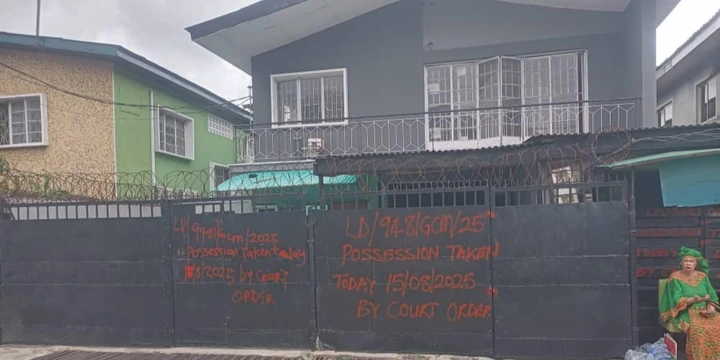
SaharaReporters had reported that the musician had been forcibly evicted from her residence in Surulere, Lagos, by her elder sister, Laura Okoh, in alleged connivance with a judicial officer and Cecil Ezem Osakwe.
Ms Ibeto, had in a petition to the Chief Judge of Lagos State and Assistant Inspector General of Police, Zone 2, through her lawyer, Onwubualili Sylvester, alleged that her elder sister, Laura Okoh, and a judicial officer conspired to illegally evict her from her late mother’s property in Surulere, Lagos, with a fraudulent court judgment.
According to the petition, Ibeto’s properties worth over N500 million were allegedly stolen and damaged during the eviction, and her tenants’ properties, including a law firm, were sealed up in the building.
She said that the judgment, delivered on July 10, 2025, granted possession and ownership of the property to Cecil Ezem Osakwe, who claimed to have purchased it from the estate administrators – Mrs Okoh.
The judgement which was delivered by His Lordship, Hon. Justice Adewunmi-Oshin of the High Court of Lagos State sitting at Osborne, in Suit No: LD/9481GCM/2025 is Between Cecil Ezem Osakwe Vs Laura Okoh & Ifeoma Stella Ilodibe as 1st to 2nd Defendants.
However, Ibeto’s lawyer alleges that the judgment was obtained through, “fraudulent means, impersonation and false depositions.” Adding that Osakwe used fake documents, including an undated Contract of Sale Agreement and Deed of Assignment to obtain the said judgement.
In the court documents, SaharaReporters obtained the Claimant (Cecil Ezem Osakwe) was represented by “one Victor Giwa Esq, while the Defendant (Ifeoma Ilodibe) was represented by one K.C Joshua of KC JOSHUA & CO, situate at 3rd Floor, Nurses House, Church gate Street, Victoria Island Lagos. Meanwhile, Victor Giwa was also listed among the Counsel in the law firm of KC JOSHUA & CO, who franked and filed the suit on behalf of the Claimant, while his principal represented the Defendant.
However, Mrs Ilodibe in a extrajudicial statement categorically stated that she was never aware of the said suit, and never served with the processes neither did she engaged the services of any lawyer to represent her in the proceeding.
Mrs. Ilodibe described her sister as “wicked” and “greedy,” saying that she had no right to sell the house without her consent. “Who gave Laura the authority to sell the house? With which papers, because our mother gave Uche the documents of the house to keep?” she asked.
The letter also alleged that Mrs. Okoh had a history of greed and jealousy, and that she had previously sold their mother’s cars without sharing the proceeds with her siblings. Mrs. Ilodibe claimed that Mrs. Okoh’s children, including Ifeanyi Maxwell Okoh and Chiedu, were also involved in the alleged fraudulent activities.
“I am not surprised that Laura and her daughter Chiedu lied to the Investigating Police Officers because when Laura speaks, only five percent of what she says is true,” Mrs. Ilodibe said. She urged the police to investigate the matter and ensure that justice is served.
In her letter, Mrs. Ilodibe requested that the police take the following actions: “allow Uche to return to her residence without harassment, punish those involved in the land grabbing, and ensure that the structure of the house is restored to its original state.” She also demanded that the losses and damages incurred by Uche be compensated.
Mrs. Ilodibe concluded by warning that if the alleged perpetrators were not brought to justice, something would happen to Uche and they would be held responsible.
The letter highlights the complex family dynamics and alleged fraudulent activities involved in the eviction of Ms. Uche Ibeto.
Earlier SaharaReporters reported that four security guards had been arrested by operatives of the Nigerian Police Force attached to Zone 2, Police Zonal Command.
The police are expected to investigate the matter and take necessary actions to ensure justice is served.
Quickly! Watch The Video Before It’s Deleted! |Save Hot 3:00 Minutes $3x V!de0s To Ur Phone Directly | Watch 2:00 H0t $3x V!d0es Now!
Quickly! Watch Before It’s Deleted! Another Popular Nigeria Pastors Wife $leeps With Male Church Member, Husband Engaged In Physical Compact Him. Watch The Full Video Here Now.
Do you want to easily get our latest news fast? kindly follow our Whats-app Channel via this Link Here Now.
Copyright 2026 Naijacoaded. All rights reserved. This material, and other digital content on this website, may not be reproduced, published, broadcast, rewritten or redistributed in whole or in part without prior express written permission from Naijacoaded.