
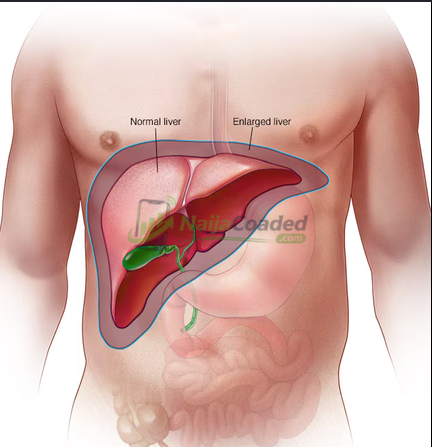
When the liver becomes swollen due to diseases, such as hepatitis, cirrhosis, fatty liver disease, or liver cancer, the body can experience various symptoms, including pain in specific areas.
The liver itself does not have pain receptors, but its swelling can lead to discomfort or pain in surrounding tissues and organs.
Here’s a closer look at the body parts where pain may occur:..To Read The Full Content; Tap Here Now .
1. Upper Right Abdominal Area: The most common and noticeable pain experienced with a swollen liver is in the upper right side of the abdomen, just beneath the rib cage. The liver is located in this region, and when it becomes inflamed or enlarged, it stretches the liver capsule (a membrane surrounding the liver), which can cause a sharp or dull ache. This pain can become more intense after meals or during physical activity.
2. Right Shoulder: Pain from an inflamed liver can sometimes radiate to the right shoulder or the area between the shoulder blades. This phenomenon, known as referred pain, occurs because the liver and the shoulder are connected through the same nerve pathways. This is a common complaint in liver conditions such as hepatitis or liver tumors.
3. Back: Some people with liver disease may experience discomfort in their back, especially in the upper or middle part of the back. This pain is often dull and can be a result of the liver’s swelling pressing against nearby structures such as the diaphragm and ribs.
4. Chest: Although less common, liver disease can sometimes lead to chest pain or a sensation of tightness. This can occur if the liver is severely enlarged and pressing on the diaphragm, which can then affect the chest area. Chest pain should be taken seriously, as it may also be indicative of other conditions, like heart disease.
5. Joints and Muscles: In chronic liver conditions, such as cirrhosis, inflammation in the liver can cause generalized discomfort and a sense of fatigue, which can translate into muscle and joint aches. The overall depletion of energy and nutrients can also lead to systemic pain throughout the body.
6. Legs and Feet: As liver function declines, fluid retention (edema) can occur, leading to swelling in the lower extremities. This swelling can cause discomfort and pain in the legs, ankles, and feet. The buildup of toxins in the body due to liver dysfunction may also exacerbate this sensation.
The pain and discomfort associated with a swollen liver often depend on the underlying condition and its severity.
It’s important to seek medical attention if liver disease is suspected, as early diagnosis and treatment can help manage symptoms and prevent further complications.