
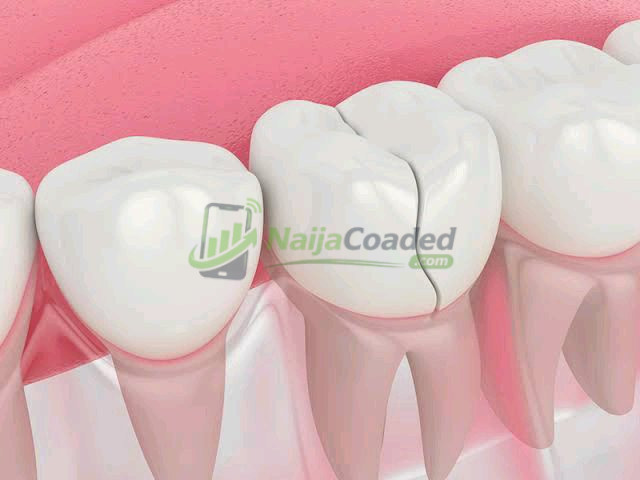
Cracked teeth are incomplete fractures that can range from harmless surface lines to deeper breaks that reach the pulp or root.
They are common, especially in adults over 40–50, and often affect back teeth (molars and premolars). Early recognition and treatment improve the chance of saving the tooth.
Types of cracks..To Read The Full Content; Tap Here Now .
Dentists classify cracks by location and severity:
– Craze lines: Tiny, shallow cracks limited to the enamel. They are common in adult teeth, usually painless, and rarely need treatment beyond monitoring or cosmetic polishing if stained.
– Fractured cusp: A break of a pointed chewing surface (cusp). Pain may occur when biting; the tooth often remains restorable with a filling or crown.
Cracked tooth (sometimes called cracked tooth syndrome): A crack that starts on the chewing surface and extends toward the root, sometimes below the gumline. It does not always separate the tooth completely but can irritate the pulp.
– Split tooth: A more advanced crack that divides the tooth into segments. Prognosis is poorer and extraction or partial removal is often required.
– Vertical root fracture: A crack that begins in the root and moves upward. These are hard to detect early and frequently lead to extraction.
Causes
Teeth crack when forces exceed the strength of the remaining structure. Common factors include:
– Grinding or clenching (bruxism), especially at night
– Chewing hard items such as ice, hard candy, nuts, popcorn kernels, or bones
– Large fillings or restorations that weaken the tooth
– Trauma (falls, sports injuries, blows to the jaw)
– Age-related wear and reduced dentin elasticity
– Sudden temperature extremes
– Gum disease with bone loss, which can increase root fracture risk
Restored teeth and those under heavy occlusal load are more susceptible.
Symptoms
Not every cracked tooth hurts. When symptoms appear they often include:
– Sharp pain on biting, sometimes worse on release of pressure
– Sensitivity to cold, heat, or sweets
– Intermittent rather than constant pain
– Localized gum swelling near the affected tooth
Pain can be hard to localize. Untreated cracks can allow bacteria to reach the pulp, leading to inflammation, abscess, or eventual tooth loss.
Diagnosis
Cracks are often invisible on standard dental X-rays because the beam must be aligned precisely with the fracture plane. Dentists may use:
– Visual examination with magnification and bright light (transillumination)
– Bite tests
– Special dyes
– Periodontal probing
– Cone-beam CT in complex cases
Signs such as vertical bone loss near a root can appear later if a vertical root fracture has been present for some time.
Treatment
Treatment depends on the depth, location, and whether the pulp is involved:
– Small chips or shallow cracks: bonding with tooth-colored resin or simple contouring/polishing
– Larger structural cracks: crowns (full coverage) to hold the tooth together and prevent further propagation; veneers may be options for front teeth with sufficient remaining structure
– Pulp involvement or irreversible inflammation: root canal treatment followed by a crown
– Split teeth or severe vertical root fractures: extraction, sometimes with hemisection if only part of the tooth is affected
Early intervention improves outcomes. Many cracked teeth with healthy or reversibly inflamed pulp can be stabilized with cuspal coverage and function for years. Teeth do not “heal” like bone; the crack remains, so protection is essential.
Prognosis and recovery
Most treated cracked teeth can return to normal function. Success is highest when cracks are addressed before they reach the pulp or cause significant periodontal damage. Some cracks can still progress despite treatment, so follow-up is important. Extraction is not inevitable but becomes more likely with delay or advanced fractures.
Prevention
Complete prevention is not always possible, but risk can be reduced by:
– Wearing a custom night guard if you grind or clench
– Using a mouthguard during contact sports
– Avoiding biting hard objects (ice, hard candy, pens, etc.)
– Maintaining regular dental check-ups so small cracks can be detected early
– Practicing good oral hygiene to keep teeth strong
Cost
Costs vary widely by country, clinic, and procedure (bonding is typically less expensive than crowns or root canal plus crown). Ask your dental team for a written treatment plan and estimate before starting care. Additional treatment for infection or headaches related to grinding can increase overall expense.