
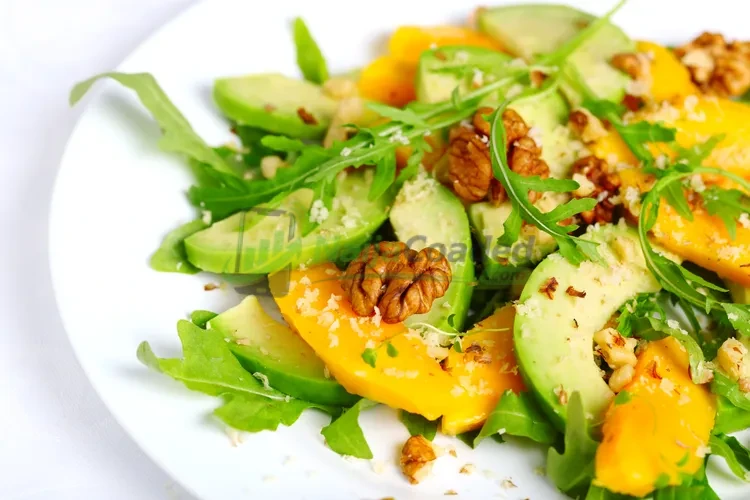
A new study found that a daily dose of avocado and mango may help support heart health for people with prediabetes, a common condition in the United States linked to an increased risk of type 2 diabetes and cardiovascular disease.1
Researchers set out to test whether simple dietary changes could improve cardiovascular markers, said Britt Burton-Freeman, PhD, a professor at Illinois Tech, director of the Center for Nutrition Research, and the study’s principal investigator.
“People get overwhelmed with big changes. This study emphasizes that you can start simple and get some positive results.”..To Read The Full Content; Tap Here Now .
To investigate the effects of a mango and avocado diet, researchers followed 82 adults with prediabetes for eight weeks. Half were randomly assigned to eat a daily cup of mango and a daily cup of avocado, while the other half ate different foods that provided the same number of calories. Both groups received pre-prepared breakfasts, snacks, and either lunch or dinner, but could also make some of their own food choices at home.
Before and after the study, researchers measured flow-mediated dilation (FMD), a test that shows how well the inner lining of blood vessels, called the endothelium, relaxes in response to increased blood flow. Participants in the mango and avocado group saw an average 1% improvement in FMD, while the control group experienced a slight decline, researchers reported in the Journal of the American Heart Association.2
That finding is significant because each 1% increase in FMD has been linked to about a 13% lower risk of cardiovascular events like stroke or heart attack.3
Men in the avocado-mango group also had a slightly lower average diastolic blood pressure (the bottom number) after the eight weeks, while those numbers increased in the control group. Research has found that even small reductions in diastolic blood pressure can meaningfully reduce heart health risk.
Participants eating mango and avocados also consumed more fiber, vitamin C, and other healthy fats overall.
“One of the most significant things this study does is push back on the persistent narrative that fruit—particularly anything beyond low glycemic berries—is problematic for metabolic health,” said Lara Zakaria, PharmD, CNS, an integrative pharmacist and nutritionist.
However, the two groups didn’t differ in changes to body weight, cholesterol, blood sugar, or inflammation markers.
The study had several limitations. It was small and short-term, and because all participants all had prediabetes, the results may not apply to the roughly two-thirds of U.S. adults without the condition.4
It also measured early markers of cardiovascular health rather than long-term outcomes like heart attack or stroke, said Kevin Shah, MD, a cardiologist at MemorialCare Heart & Vascular Institute at Long Beach Medical Center.
Furthermore, the study was funded by the Hass Avocado Board and the National Mango Board.
Still, if eating mango and avocado daily does improve vascular health, there are a few possible explanations. The researchers didn’t directly dig into the mechanisms, but Burton-Freeman noted that “both fruits have published data that motivated [us] to test them together.”
For example, mangos and avocados are rich in nutrients like vitamin C and potassium, which have been linked to improved endothelial function—how well the inner lining of blood vessels regulates blood flow and dilation. Both fruits also contain phytochemicals, compounds that help protect the blood vessels’ inner lining.56
The two foods may work synergistically, Zakaria said. For instance, the monounsaturated fat in avocados may help the body absorb phytochemicals. “None of these mechanisms are operating in isolation,” she said. “They are reinforcing each other, which is exactly how whole food nutrition works.”
While the study included only people with prediabetes, Zakaria said she’d encourage anyone to increase both the amount and variety of fruit in their diet—and regularly eating mango and avocado would be a good place to start.
“Mango and avocado are staples in Latino and many other cultural food traditions,” she said. “These aren’t niche or expensive superfoods—they are widely eaten, widely available, and deeply familiar across diverse communities.”
Still, Shah said the bigger takeaway isn’t that everyone needs to eat a specific amount of mango or avocado every day. Instead, the findings highlight that cardiovascular health often improves through small, consistent dietary changes, not a single “superfood.”
If you do want to up your avocado and mango intake, however, Zakaria offered some suggestions: simply mix them into Greek yogurt, smoothies, salsa, or salads, or serve them alongside an egg dish.