
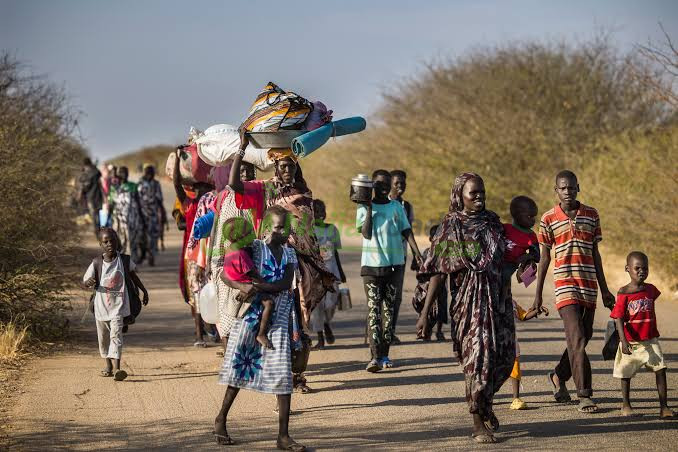
Africa is home to some of the world’s fastest-growing economies, but several countries still face severe challenges such as poverty, unemployment, political instability, limited infrastructure, and low access to quality healthcare and education.
When comparing countries by GDP per capita, which measures the average economic output per person, these are among the poorest countries in Africa:
1. Burundi...To Read The Full Content; Tap Here Now .
Burundi is frequently ranked among the poorest countries in the world. A large part of the population depends on small-scale agriculture, while limited infrastructure and economic opportunities continue to affect living standards.
2. South Sudan
Despite having significant oil resources, South Sudan faces widespread poverty. Years of conflict, political instability, displacement, and limited infrastructure have made economic development extremely difficult.
3. Central African Republic
The Central African Republic has abundant natural resources, but political instability and conflict have severely affected its economy. Many people depend on subsistence farming and have limited access to basic services.
4. Malawi
Malawi’s economy relies heavily on agriculture, making it vulnerable to droughts, floods, and changing weather conditions. Low incomes and limited industrial development remain major challenges.
5. Mozambique
Mozambique has valuable natural resources, including natural gas and minerals, but poverty remains widespread. Conflict in some regions, climate disasters, and limited access to infrastructure have slowed development.
6. Niger
Niger faces major challenges from poverty, rapid population growth, climate pressures, and dependence on agriculture. Much of the country is also affected by the harsh conditions of the Sahel.
7. Democratic Republic of the Congo
The Democratic Republic of the Congo possesses enormous mineral and natural resources, yet millions of people live in poverty. Conflict, weak infrastructure, and limited access to essential services continue to affect economic development.
8. Madagascar
Madagascar has a unique natural environment and significant agricultural and mineral resources, but poverty remains high. Cyclones, droughts, and limited infrastructure frequently affect livelihoods.
9. Liberia
Liberia has made progress since its civil wars, but poverty remains a major issue. The economy depends heavily on agriculture, mining, and other resource-based activities.
10. Sierra Leone
Sierra Leone has valuable mineral resources, including diamonds and iron ore, but poverty remains widespread. Economic growth has also been affected by past conflicts, disease outbreaks, and limited infrastructure.
Why are some African countries still poor?
Poverty in these countries cannot be explained by one factor. Civil conflict, corruption, weak institutions, poor infrastructure, limited access to education and healthcare, climate change, dependence on agriculture, and unfavorable global economic conditions can all contribute.
It is also important to remember that being one of Africa’s poorest countries does not mean the country has no resources or potential.
Several of these nations have significant agricultural, mineral, tourism, or energy resources and could experience substantial economic growth with greater stability, investment, infrastructure, and effective governance.
Note: Rankings can change depending on whether you use GDP per capita, purchasing power parity (PPP), national income, or multidimensional poverty.