
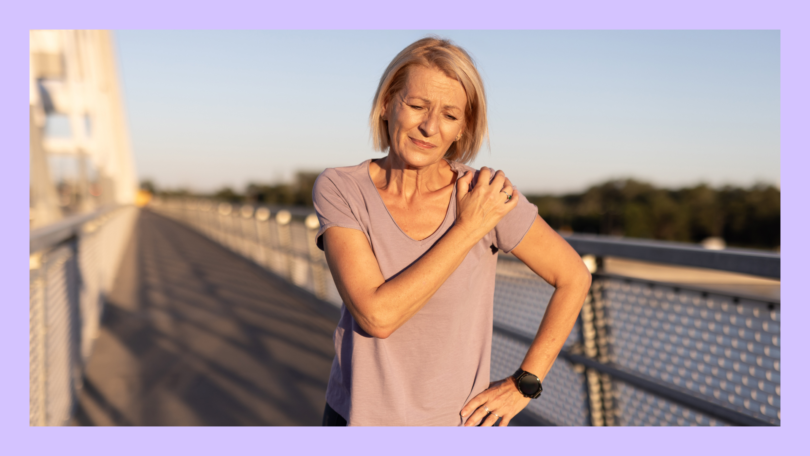
Most of us expect night sweats, brain fog and irregular periods to be part of the menopause journey, but a frozen shoulder and weird, all-over achiness?
Come on! While menopause joint pain usually isn’t on anyone’s meno-bingo card, it should be: More than 50% of women experience joint pain or arthritis around the time of menopause, according to a retrospective review in the journal Post Reproductive Health.
One study in Mayo Clinic Proceedings even found that joint pain and muscular discomfort were about as common as hot flashes...To Read The Full Content; Tap Here Now .
“There’s now a greater recognition of different menopause-related symptoms, but some women still aren’t connecting the dots to joint pain,” says Dr. Ekta Kapoor, associate professor of medicine at the Mayo Clinic College of Medicine and lead author of the Mayo Clinic study.
OK, but why are your joints suddenly rebelling? Let’s break down what’s really going on — and what actually helps ease the ache.
Why does menopause cause joint pain?
Menopause symptoms rarely have a simple, straightforward explanation, and joint pain is no exception. “Multiple mechanisms or causes could be at play; it’s not very well understood,” Kapoor says. But science does offer some clues as to why low estrogen can be such a pain in the knee, hip, shoulder … and butt! Here’s what researchers know so far:
When estrogen drops, inflammation spikes: Estrogen normally helps keep inflammation in check, so when levels fall during perimenopause and menopause, low-grade inflammation can ramp up throughout the body — “including those in the lining of your joints,” says Dr. Jocelyn Wittstein, associate professor of orthopaedic surgery at Duke University School of Medicine in Durham, N.C. Inflammation can also accelerate cartilage thinning, which only adds to pain and stiffness.
Fewer hormones mean lower pain tolerance. Hormones are natural pain-fighters. In fact, a 2025 report noted that estrogen receptors in specific areas of the nervous system play a role in regulating pain. And another 2025 study from the University of California San Francisco, shows that estrogen and progesterone may even help block some pain signals before they get to your brain. (Menstrual cramp and birthing superpowers, activate!) When hormone levels drop, however, that built-in pain buffering drops too.
Bone and muscle loss make joints work harder. As estrogen declines, bone density and lean muscle start to fall — sometimes years before your final period — which forces your joints to absorb more stress. “For example, there’s a bone under the cartilage of the knee, and one theory about knee arthritis is that it may be related to the weakening of that bone,” Wittstein says.
Sleep and mood changes can amplify pain. Menopause symptoms like poor sleep, anxiety and mood shifts can make joint pain feel worse — and vice versa. “If you’re not sleeping well, would you feel achy and tired during the day? Definitely,” says Kapoor, whose research found that sleep issues were the most commonly reported menopause symptom. Mood disturbances and depression in menopause can also manifest as fatigue and achiness. Joint pain can then worsen sleep and mood issues, creating a self-perpetuating cycle, Kapoor adds.
What does menopause joint pain feel like — and which joints are affected?
Have you ever seen those Everything Hurts T-shirts? We’re willing to bet menopausal women keep the manufacturer in business. “Women often describe their symptoms as non-specific aches and pains everywhere,” Kapoor says. “We don’t see anything on imaging, as would be the case with arthritis; it’s just a deep sense of achiness, stiffness or like your joints don’t want to open up.”
But menopause joint pain isn’t always that generalized — for some women, it hits specific joints or shows up alongside early arthritis, which may begin or worsen right about the same time, says Wittstein. Postmenopausal women are nearly twice as likely to develop arthritis as men of the same age. “The shoulder, knee and hands are the most common painful joints in menopause — and they’re also some of the most common sites for arthritis,” Wittstein says.
The shoulder, though, is special. Issues are so common, they have their own nickname: frozen shoulder. “It’s not arthritis, but there is inflammation and stiffening,” Wittstein says.
Is it menopause or arthritis? How to tell the difference
Arthritis tends to play favorites. “People generally tell you, ‘Oh, this or that is my worst joint’ or ‘My knees are really killing me,’ and imaging supports the diagnosis of arthritis,” Kapoor says. “With menopause joint pain, however, it’s usually more of an achiness everywhere.”
If your middle-aged aches and pains are due to arthritis, the condition will reveal itself on X-rays, appearing as a narrowing of the space between the bones at the joint due to loss of cartilage. But if an estrogen nose-dive or inflammation is the reason, imaging can’t show that. The bottom line? If you’re unsure what’s causing your pain, it’s worth getting it checked out.
How to relieve joint pain during menopause
Since menopausal joint pain often doesn’t have a single culprit, the best plan of action is to attack it from multiple angles. “Adoption of healthy lifestyle measures and addressing sleep, which we know can contribute to achiness, can be a lofty goal, but it’s a good place to start,” Kapoor says. Here are the strategies that actually work:
Lifestyle strategies to help with menopausal joint pain
Prioritize sleep hygiene. Since poor sleep is associated with markers of inflammation, start here. Ditch your phone, keep a standard bedtime/wake schedule, keep the room cool and dark … you know the drill. (Learn more about perfecting your sleepytime routine.)
Limit ultra-processed foods. “They alter the gut’s microbiome and contribute to systemic inflammation,” Kapoor says. Being overweight can also make joint pain worse, and ultraprocessed foods don’t help. Struggling to get less-processed meals on the table? Maybe a healthy meal delivery service can help.
Eat to fight inflammation. Think omega-3s in fatty fish, whole grains and fresh produce, says Wittstein. (Learn more about what to eat during menopause.)
Get stronger. “Strength training can build and maintain muscle around your joints, which takes stress off joints,” Wittstein says. You can work with a physical therapist if needed, but don’t skip the weights. (Find out which are the best exercises for menopause.)
Keep moving. Even a simple daily walk may protect you against some joint pain and prevent it from worsening. (Try one of Yahoo’s best walking sneakers, best walking poles, best walking pads, best treadmills or best pedometers to help you hit your daily walking goal.)
Ice, heat, wrap, soak … your call. While ice and compression normally help with joint inflammation, Wittstein says, “I usually tell people, do whatever feels good.” (Learn more about how cold therapy might help.)
Medical and therapeutic options to help with menopausal joint pain
If lifestyle changes aren’t enough, these treatment options can provide additional relief:
Head to physical therapy. Professionally led stretching and range-of-motion exercises, which you also do at home, can offer significant improvements.
Topical treatments. Creams, gels and other topicals such as Voltaren (an anti-inflammatory) or others like Bengay and Icy Hot may provide relief. (Here are Yahoo’s tried-and-tested picks for best pain relief creams.)
Corticosteroid injections. It’s a “mainstay” treatment for frozen shoulder, since it helps temper inflammation, Wittstein says.
Non-hormonal medication. NSAIDs like ibuprofen offer temporary relief, but if you need them for longer than a week or so, see your doctor, Wittstein says. Other Rx meds used for fibromyalgia or chronic pain, for example, may help.
Sleep apnea treatment. If you deal with the double whammy of achiness and restless nights, it’s worth getting checked out for sleep apnea, Kapoor says.
Supplements. Fish oil, turmeric curcumin and hydrolyzed collagen are often used for arthritis, and they may ease general joint pain too, Wittstein says. Check in with your healthcare provider before adding anything new. You can also browse Yahoo’s picks for the best fish oil, best turmeric curcumin supplements and best collagen.
Does hormone therapy (HRT) help joint pain in menopause?
If you’re hoping that taking estrogen will get you back on the pickleball court pain-free, know that the research is mixed. But if you have night sweats that mess with your sleep and leave you achy, hormone therapy can be really effective, Kapoor says. Discuss with your health care provider whether HRT is suitable for your individual situation.
When to see a doctor about menopause joint pain
The time is now! There’s never a need to suffer in silence, no matter your menopause symptoms — and if you can’t find a local menopause specialist, online menopause care can be a great option. Still, it’s important to loop in a rheumatologist if you’re noticing red flags for arthritis. “If your knee looks like a grapefruit or you can’t bend or straighten it all the way, that’s not normal,” Wittstein warns.
A rheumatologist or orthopedist (or possibly both) should be your go-to if you’re dealing with any of the following for more than three consecutive days or several days each month:
Swelling or stiffness that doesn’t go away
A spot that’s red or warm to the touch
Tenderness that keeps sticking around
Difficulty using the affected area or doing everyday movements