
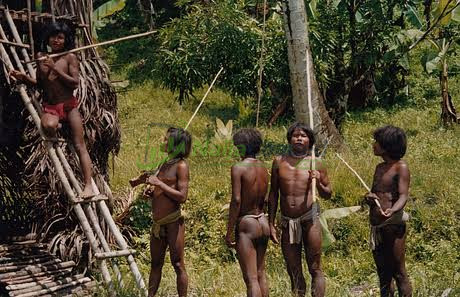
Across the world, a few remote human groups still live without modern technology, outside global society, and with almost no external contact.
These communities are known as uncontacted or isolated tribes, and governments strictly forbid outsiders from approaching them not because they are dangerous, but because contact can threaten their survival.
Below are the most recognized isolated tribes and why authorities protect them...To Read The Full Content; Tap Here Now .
1. The Sentinelese (North Sentinel Island, India)
The Sentinelese are considered the most isolated people on Earth. They live on North Sentinel Island in the Andaman Sea.
Why Contact Is Forbidden
They have no immunity to modern diseases like flu or measles. Even limited contact could cause a deadly outbreak.
The Indian government enforces a strict 5-kilometer exclusion zone around the island.
Their isolation is a survival strategy they have lived independently for tens of thousands of years.
2. The Korubo (Brazil)
Found deep in the Amazon rainforest, the Korubo (“the club people”) avoid almost all contact with the outside world.
Why Contact Is Forbidden
Past attempts at contact have resulted in illness among tribe members.
Brazil’s indigenous protection agency, FUNAI, enforces “no-contact” policies to preserve their culture and health.
3. The Mashco-Piro (Peru)
One of Peru’s largest uncontacted groups, living in the remote Amazon region.
Why Contact Is Forbidden
They face serious threats from outside diseases.
Government laws ban unapproved contact to prevent exploitation, violence, or cultural disruption.
4. The Ayoreo-Totobiegosode (Paraguay/Bolivia)
A small, vulnerable group living primarily in the Gran Chaco forest.
Why Contact Is Forbidden
Logging and land conflicts threaten their survival.
Health officials warn that even small exposures to illness could eliminate the group entirely.
Why All Contact Is Blocked by Law
Experts agree that uncontacted tribes are not hostile they are highly vulnerable. Governments enforce no-contact laws because:
1. Disease Risk
These groups lack immunity to common infections. A simple cold could spread rapidly and become fatal.
2. Protection of Culture and Land
Contact can destroy traditional lifestyles or lead to exploitation.
3. Respect for Their Choice
These tribes have repeatedly shown they prefer isolation. International law protects their right to remain uncontacted.