
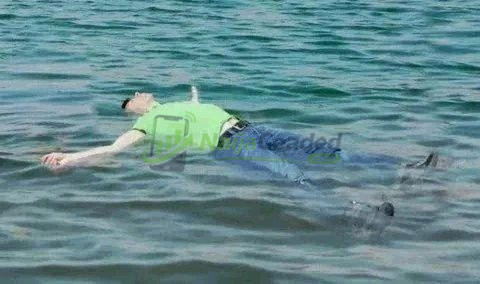
The question of why dead bodies float while living bodies sink is both a scientific and practical topic that has fascinated people for centuries.
Understanding it requires looking closely at human physiology, buoyancy, and decomposition.
When a person is alive, their body is actively regulating oxygen, blood flow, and metabolism. The lungs are filled with air, but the muscles, tissues, and bones are denser than water...To Read The Full Content; Tap Here Now .
Even though we can float in water because of the air in our lungs, many people still sink initially if they are not actively treading water or inflating their lungs fully. A living body also has a certain level of control over posture, breathing, and movement, which affects buoyancy.
In contrast, after death, the body undergoes several chemical and physical changes. One of the most important processes is decomposition. When cells break down, bacteria in the gut and tissues produce gases such as methane, carbon dioxide, and nitrogen. These gases accumulate inside the body, particularly in the abdomen and chest cavities, causing the body to become less dense than water.
As a result, the body starts to rise to the surface, making it float. The time it takes for a body to float depends on factors like water temperature, clothing, body fat, and the presence of injuries. Cold water slows decomposition, so a body may sink longer before eventually floating.
Another contributing factor is body fat. Fat is less dense than water, so bodies with higher fat content tend to float faster than leaner bodies. Meanwhile, living humans sink initially if they are not actively swimming because their muscles and bones are denser than water and they do not yet have the gas accumulation that creates buoyancy in a dead body.
This phenomenon is why recovery teams often find drowned bodies floating after some days rather than immediately. It’s a combination of biology, chemistry, and physics working together, showing how life and death affect even simple things like whether a body sinks or floats in water.