
Here’s what makes you so attractive to the bugs and how you can prevent bites.
If you’ve ever been at an outdoor party or BBQ during the fading hours of daylight and don’t personally notice an increase in the number of mosquitoes, you’ll probably hear someone complaining about it. That’s because mosquitoes are selective insects, and some people are more likely to get bites than others.
Person touching their neck with visible red, irritated skin possibly from insect bites or an allergic reaction..To Read The Full Content; Tap Here Now .
There are a few factors that could contribute to why this happens: In one controlled study by the Journal of Medical Entomology, the bugs landed on people with blood Type O nearly twice as frequently as those with Type A. The researchers noted this has to do with secretions we produce, which tips mosquitoes off on a person’s blood type.
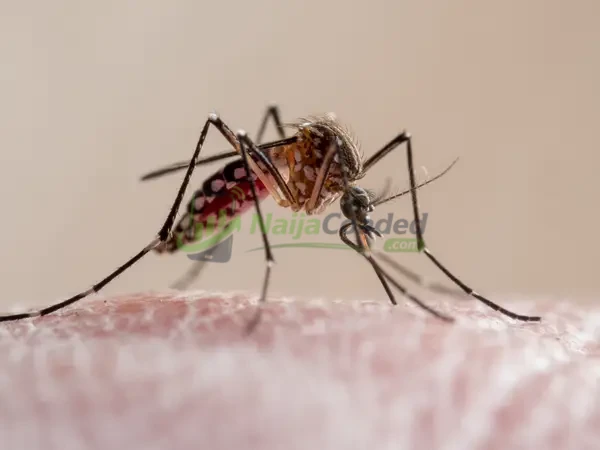
Mosquito perched on human skin, showcasing the insect’s body and legs in sharp focus
More research needs to be conducted on mosquitoes’ potential preference for certain blood types over others, said Jonathan F. Day, an entomology professor at the University of Florida. But he agreed that mosquitoes do pick up on some cues we give off that make the bugs more likely to land on certain people.
Red blood cells floating dynamically in a 3D representation, showcasing their shape and structure
“These cues let them know they are going to a blood source,” Day said. “Perhaps CO2 is the most important. The amount of CO2 you produce, like people with high metabolic rates ― genetic, other factors ― increases the amount of carbon dioxide you give off. The more you give off, the more attractive you are to these arthropods.”
Close-up of a mosquito biting human skin
But what separates us from the nonliving entities that give off carbon dioxide, like cars? Mosquitoes look for primary cues in conjunction with what Day calls “secondary cues.” Lactic acid — the stuff that causes our muscles to cramp during exercise — is one of those secondary cues, for example. Lactic acid is released through the skin, signaling to mosquitoes that we are a target, Day said.
Close-up illustration of bacteria or microscopic organisms with rod-like shapes, depicted in a scientific context
Mosquitoes also have other qualities that help them pick up on secondary cues. “Mosquitoes have excellent vision, but they fly close to the ground to stay out of the wind,” Day said. “They are able to contrast you with the horizon, so how you’re dressed matters. If you have on dark clothes, you are going to attract more because you’ll stand out from the horizon, whereas those wearing light colors won’t as much.”
Close-up of a mosquito perched on a surface with visible droplets on its legs and body, highlighting its intricate features
A mosquito also takes in “tactile cues” once it has landed on you. “Body heat is a really important tactile cue,” Day said. “That comes into play with genetic differences or physiological differences. Some people tend to run a little warmer — when they land, they’re looking for a place where blood is close to the skin.” That means those whose temperatures are a little higher are more likely to get the bite.
Person spraying insect repellent on arm outdoors in a natural setting
Lifestyle or other health factors may also play a role, said Melissa Piliang, a dermatologist at Cleveland Clinic. “If body temperature is higher, you’re exercising and moving around a lot, or if you’re drinking alcohol, you are more attractive to mosquitoes,” Piliang said. “Being pregnant or being overweight also increases metabolic rate.”
Person resting hands on their pregnant belly, lying down in a relaxed position. Their face is not visible
One study showed that people who consumed just one can of beer were more at risk of attracting mosquitoes than those who didn’t. Of course, drinking outside is a popular summer and fall activity. “If you’ve been moving around all day doing yardwork and then you stop around dusk and drink a beer on your patio, you’re definitely at risk of bites,” Piliang said.
Person drinking a glass of beer while wearing a pink shirt and black headphones around their neck in a room with string lights
How To Prevent Mosquito Bites.
Just because you might be more prone to bites doesn’t mean they have to be an inevitability.
Person scratching their arm, showing several small red bumps, possibly indicating an itch or irritation
“One of the very best things to do is to avoid peak activity times [for mosquitoes],” Day said. “There are very, very few species that are active in the middle of the day. They are very selective. Sunrise and sunset are when you’ll see peak activity.” Switching your early morning run to an after-work run could help here.
A large flock of birds flies across an open sky with a gradient background
Of course, this tip won’t help you if you’re, say, throwing a BBQ for friends later at night. Try to cover as much skin as you can in these cases, Day said, especially in areas or at times mosquitoes are most likely to be present.
Young child sitting at a table, looking down with a thoughtful expression, gently touching their arm
“I love the fishing shirts and the long-legged outdoor pants that are breathable, but they prevent mosquitoes,” Day said. “A repellent that has a good protection time ― defined as the time from when you apply to when you get the first bite ― is also great. Roughly 5% DEET sprays gives you 90 minutes of complete coverage.”
Person in sporty attire and cap fishing from a boat, looking out into the ocean with coastal mountains in the background
DEET is a common ingredient in insect repellents, and sprays with DEET are probably the way to go if you know you’re at risk of bites, Piliang said. Despite the controversy over the health effects of DEET, a 2014 review by the Environmental Protection Agency re-concluded that normal use of DEET products does not pose a risk to one’s health, including children, pregnant women and breastfeeding women.
An adult sprays insect repellent on a child's leg outdoors
“DEET is the most effective,” Piliang said. “If you are going to be in a mosquito-prone place, knowing that they carry disease, it is your best bet. Take a shower later to wash it off, and put on just a little bit.” Always read the directions on a spray before using it, and help children apply products by following the US Centers for Disease Control and Prevention guidelines.
Person applying spray on their leg outdoors, standing on a sunlit street
And while you may have heard that candles containing natural repellents like citronella oil can be useful, there is no research to support it yet. Instead, keep the fan on or hang out in a breezy area.
Four tea light candles glowing inside clear glass holders
“Mosquitoes can’t get around very much,” especially in wind, Piliang said. “You can run a fan to keep air moving.”
A mosquito clings to the underside of a leaf, its long legs and slender body visible against a natural background
If you do end up with a bite, you may or may not be bothered. “This all depends on how allergic you are to the chemicals in the saliva of the mosquito, and that can vary based on the type of the mosquito or how reactive you and your skin are to things in the environment,” Piliang said.
A close-up of a child's legs with a circular rash on the knee, possibly a bug bite or skin irritation. The child is wearing shorts
If it is itchy, the worst possible thing you can do is scratch it. “If you do, then more histamine is released and it gets itchier,” she said. “If you scratch it, you’re also more likely to break skin. You can get bleeding, scabs and put yourself at risk for infection and scarring.”
Person scratching their forearm, wearing a striped skirt and ribbed tank top
But there are a few simple things you can do to alleviate the itch, like putting an ice cube on it. “The sensation of cold travels on the same nerve as itch, so you cannot feel both at the same time,” Piliang said. “Even a drink with ice on it will help relieve itch immediately.”
Close-up of a person's hand holding a melting ice cube, illustrating a concept related to health or temperature
If you’ve received several bites after a morning or evening outside, she also recommended over-the-counter anti-itch creams with a mild topical steroid like hydrocortisone. “You can apply that two to three times a day to reduce itch,” she said.
Person applying cream to their forearm with a small tube, suggesting a skincare or health-related activity
“And the last thing you can do if you’re really bit up is take an antihistamine,” she added. “It can counteract the reaction a bit.” While OTC types that make you drowsy — like Benadryl — are more common, you can take non-drowsy antihistamines like Zyrtec or Allegra for daytime relief.
Of course, prevention is always better than treatment, so use these tips to stave off bites in the first place as you head out for the season’s remaining BBQs and tailgates.