
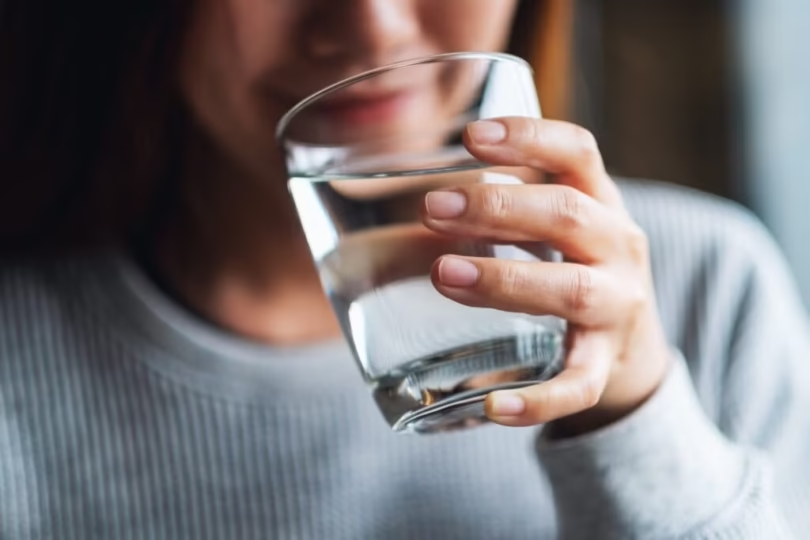
You’ve probably heard the advice to “drink 8 glasses of water every day.” While eight glasses can be a simple reminder for some people, there isn’t a single amount of water that everyone needs.
Your water needs depend on factors such as your body size, activity level, weather, diet, pregnancy status, and overall health. The important thing is to stay adequately hydrated throughout the day rather than trying to drink a large amount at once.
Here is a simple schedule you can use as a starting point...To Read The Full Content; Tap Here Now .
1. After Waking Up — 6:00–7:00 AM
Amount: 1 glass
After several hours of sleep without drinking, having some water when you wake up can help replace fluids.
You don’t need to drink two large glasses immediately. A normal glass is enough if you’re thirsty.
2. During the Morning — 8:00–9:00 AM
Amount: 1 glass
Have another glass around breakfast or afterward, especially if you feel thirsty.
Water supports normal digestion and helps your body maintain its fluid balance.
3. Before Lunch — 11:30 AM–12:00 PM
Amount: 1 glass
Drinking water before a meal can help you stay hydrated and may help you feel fuller.
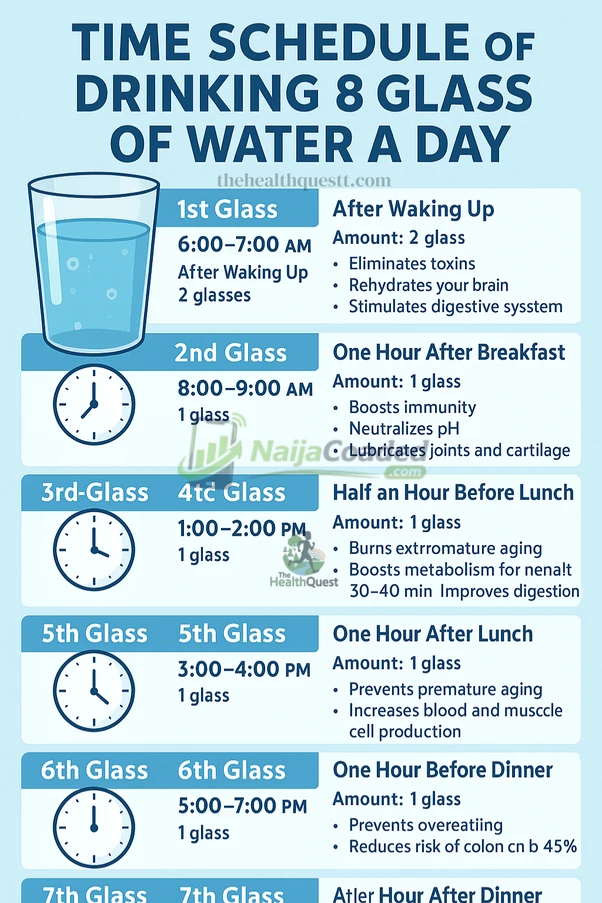
However, water isn’t a magic fat-burning or metabolism-boosting drink. Maintaining a healthy weight depends primarily on your overall diet, physical activity, sleep, and other lifestyle factors.
4. Early Afternoon — 1:00–2:00 PM
Amount: 1 glass
Continue drinking water throughout the afternoon rather than waiting until you become extremely thirsty.
If you’ve been exercising or spending time outdoors in hot weather, you may need more fluids.
5. Mid-Afternoon — 3:00–4:00 PM
Amount: 1 glass
A glass of water can be a good choice during your afternoon break, particularly if you’re reaching for tea, coffee, or a sugary drink simply because you’re thirsty.
6. Before Dinner — 5:00–7:00 PM
Amount: 1 glass
Having some water before dinner can contribute to your daily fluid intake and may help you avoid confusing thirst with hunger.
There’s no good evidence that drinking water at this particular time reduces your risk of colon cancer by 45%.
7. Evening — 8:00–9:00 PM
Amount: 1 glass, if needed
If you’re thirsty in the evening, have some water.
You don’t need to force yourself to drink a full glass if you’re already well hydrated. Drinking too much close to bedtime may simply cause you to wake up during the night to use the bathroom.
8. Before Bed — Around 9:30–10:00 PM
Amount: Only if you’re thirsty
You don’t need to drink a full glass immediately before sleeping just to reach an arbitrary eight-glass target.
If you’re adequately hydrated, forcing yourself to drink extra water before bed can interfere with your sleep.
How Much Water Do You Actually Need?
The idea that everyone must drink exactly eight glasses of water every day is an oversimplification.
Your total water intake comes from beverages as well as foods such as fruits, vegetables, soups, and other foods containing water.
A practical way to monitor hydration is to drink regularly throughout the day and pay attention to your thirst. Pale-yellow urine is generally a sign that you’re reasonably hydrated, although urine color can be affected by certain foods, medications, and supplements.
You may need more water when you’re exercising, sweating heavily, experiencing vomiting or diarrhea, or spending time in hot weather.
Don’t Overdo It
More water isn’t always better. Drinking excessive amounts in a short period can cause dangerously low blood sodium levels, known as hyponatremia.
People with certain heart, kidney, or liver conditions may also have specific fluid restrictions and should follow their healthcare professional’s advice.
The Bottom Line
Instead of worrying about drinking exactly eight glasses at specific times, focus on regular hydration throughout the day.
Keep water nearby, drink when you’re thirsty, drink more when you’re losing fluids through sweat or exercise, and avoid forcing down large amounts of water when your body doesn’t need it.
Good hydration is a daily habit—not a strict timetable.